API 653 Certification Guide: Tank Inspector Eligibility, Exam and Renewal
Last updated:
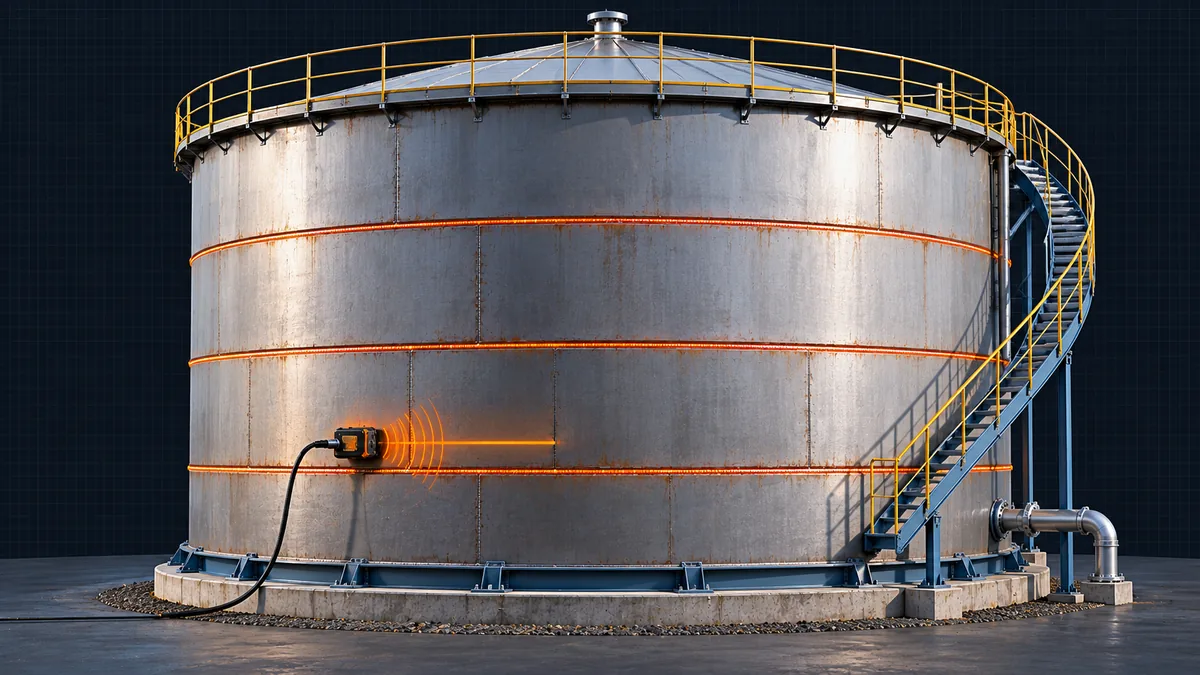
API 653 certification is the credential that shows a tank inspector meets the minimum qualifications specified in API Standard 653 for inspecting, repairing, altering and reconstructing aboveground storage tanks, and it is issued through the American Petroleum Institute (API) Individual Certification Programs (ICP). This guide explains who is eligible, how the exam is built, what it covers, how to apply, how to prepare and how to renew.
Quick answer: API 653 certification is the Aboveground Storage Tank Inspector credential issued by the American Petroleum Institute (API) through its Individual Certification Programs (ICP). You qualify through education plus tank experience, pass a 7.5-hour exam of 170 questions, and renew every three years with documented inspection work, 24 hours of professional development and a web quiz every six years.
The inspector's code covers tanks that are mostly built to API Standard 650, and the construction side is explained in the guide to API 650 tank welding requirements. If you also work on pressure vessels, the API 510 pressure vessel inspector certification guide follows the same program structure.
This guide stays on eligibility, exam and renewal. Fees, exam windows and policies change, so confirm every date and figure on the API website before acting.
Key takeaways
- Eligibility combines education and experience with aboveground storage tanks, from 1 year for a degree holder to 5 or more years with no formal education, gained in the last 10 years.
- The exam day lasts 7.5 hours with 170 questions: 110 closed-book and 60 open-book, of which 140 are scored and 30 are pretest.
- The open-book portion uses PDF documents on the computer, limited to the sections on the Publications Effectivity Sheet for the exam window.
- Certification is valid for three years, and renewal needs documented tank inspection work, 24 hours of continuing professional development and a web quiz every six years.
- API sets and updates the Body of Knowledge, fees and exam windows, so always use the current documents.
What Is API 653 Certification?
API 653 certification is a personnel credential that confirms an inspector's knowledge of inspection and repair of aboveground storage tanks as required by API Standard 653.
The American Petroleum Institute (API) started the program with the participation of storage tank owners and users. API describes it as a uniform national program that assists state and local governments in regulating aboveground storage tanks. The credential is valid for a three-year term, and API states that the program is accredited by the American National Standards Institute (ANSI) under International Organization for Standardization standard ISO/IEC 17024, which covers bodies that certify persons.
The exam is designed to show that a candidate satisfies the minimum qualifications specified in API Standard 653, Tank Inspection, Repair, Alteration, and Reconstruction. That standard applies to tanks built to API Standard 650 and other tank standards, so the exam reaches into construction knowledge as well as in-service inspection.
Certification and authority. The credential shows that you meet API's qualification and examination requirements. The owner-operator's inspection program and any jurisdictional rules decide which reports you may sign. More career-focused explainers are listed in the career and certification guides on WeldFabWorld.
The official program page is maintained by API's API 653 Aboveground Storage Tank Inspector certification page. Use it as the final authority on dates, fees and policy.
Who Is Eligible for API 653 Certification?
Eligibility for API 653 certification depends on a combination of education and experience with aboveground storage tanks, as set out in Annex D of API 653. The experience must have been gained within the last 10 years while employed by, or under contract with, an authorized inspection agency as defined in API 653, and it must be documented on the application.
| Education | Experience required | What the experience must include |
|---|---|---|
| BS or higher in engineering or technology, or 3+ years of military service in a technical role | 1 year | Supervision or performance of inspection activities as described in API 653 |
| 2-year degree or certificate in engineering or technology, or 2 years of military service in a technical role | 2 years | Design, construction, repair, operation or inspection of aboveground storage tanks, including 1 year of supervision or performance of inspection activities |
| High school diploma or equivalent | 3 years | Design, construction, repair, operation or inspection of aboveground storage tanks, including 1 year of supervision or performance of inspection activities |
| No formal education | 5 or more years | Design, construction, repair, operation or inspection of aboveground storage tanks, including 1 year of supervision or performance of inspection activities |
A dishonorable discharge disqualifies military service credit. API verifies the documented experience after submission. The table summarises API's published matrix, so check the current version before applying.
Worked example: does this candidate qualify?
The example tests two candidates against the table. Both are assumed to have gained their experience within the last 10 years with an authorized inspection agency.
What counts as inspection experience?
The one-year inspection requirement refers to supervision or performance of inspection activities as described in API 653. Design, construction, repair and operation of tanks count toward the total years for candidates with less formal education, but they do not replace the inspection year. Keep dated records of the tanks, activities and employers involved, because API verifies the claim.
How Is the API 653 Exam Structured?
The API 653 exam is a 7.5-hour computer-based day with 170 questions: 110 closed-book questions in a 2.75-hour session and 60 open-book questions in a 3.75-hour session, separated by a 45-minute lunch break. Of the 170 questions, 140 are scored and 30 are pretest questions.
| Feature | Detail |
|---|---|
| Exam day length | 7.5 hours including tutorial and lunch |
| Closed-book portion | 110 questions in 2.75 hours |
| Lunch break | 45 minutes |
| Open-book portion | 60 questions in 3.75 hours |
| Scored questions | 140 of 170 scored |
| Pretest questions | 30 of 170 unscored |
| Venue | In person at designated Prometric computer testing centers |
| Materials | No papers or books; code PDFs on the computer for the open-book portion |
Worked example: how much time per question?
Pacing is a core skill because tank questions often need several lookups. The calculation divides each session by its question count and treats all 170 questions as scored, because pretest questions are not identified in advance.
How are pretest questions handled?
API includes 30 pretest questions in the 170 and publishes a pretest questions policy on its certification page. Treat every question as if it counts, and do not spend exam time trying to guess which ones are unscored.
What Does the API 653 Exam Cover?
The API 653 exam covers the topics listed in the API 653 Body of Knowledge (BOK), and its questions come from the publications named on the Publications Effectivity Sheet for the exam window. API publishes both documents on its API 653 certification page, with separate versions for March 2026 to November 2026 exams and for March 2027 to November 2027 exams.
Only the specific sections of each publication listed on the Effectivity Sheet are available in the open-book portion. Study to the BOK, not to a general list of tank topics, because the editions and sections change between windows.
| Publication | Issuing body | Role in the exam |
|---|---|---|
| API Standard 653 (API 653) | API | Core code for tank inspection, repair, alteration and reconstruction |
| API Standard 650 (API 650) | API | Construction standard for welded tanks |
| API Recommended Practice 575 (API RP 575) | API | Inspection practices for atmospheric and low-pressure storage tanks |
| API Recommended Practice 651 (API RP 651) | API | Cathodic protection of aboveground petroleum storage tanks |
| API Recommended Practice 652 (API RP 652) | API | Lining of aboveground petroleum storage tank bottoms |
The BOK may name other publications in some cycles, so treat any list, including this one, as indicative.
Which topics appear in the Body of Knowledge?
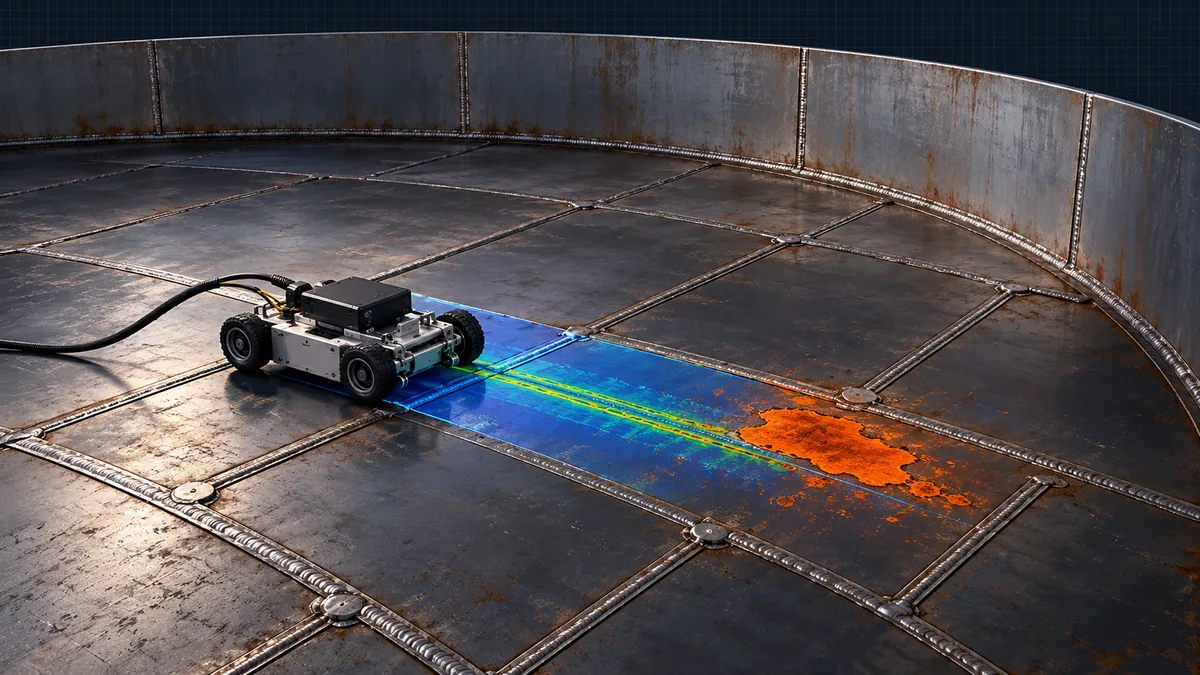
Recent BOK versions list tank-specific calculation and judgement topics. Examples include metal loss with corrosion averaging, inspection intervals, determining the maximum liquid height of a tank, localized bottom settlement, and the importance of adequate material toughness. Tank shell corroded-area evaluation also appears in the document. These are examples taken from recent versions, so always read the version for your exam date.
How much materials and welding knowledge is needed?
A tank inspector must judge repair welds, material toughness and corrosion damage. Background reading on the types of corrosion helps with metal loss questions, and the guide to Charpy impact test requirements under UG-84 explains the toughness concepts that tank material rules build on.
Weld terminology also matters. The guides to welding joint types, P-Numbers, Group Numbers and F-Numbers and mechanical testing of welds cover the joint, grouping and test concepts that repair and qualification records rely on. ASME publishes the qualification code through the American Society of Mechanical Engineers (ASME).
How Do You Apply for API 653 Certification?
You apply for API 653 certification online through the API Individual Certification Programs, after confirming that your education and documented experience meet the eligibility table. API verifies the experience after submission, and the exam is taken in person at a designated test center.
- Check your eligibility. Compare your education and documented tank experience with the eligibility table in Annex D of API 653, as reproduced on the API 653 certification page. Confirm that the experience falls within the last 10 years.
- Download the study documents. Download the Body of Knowledge and the Publications Effectivity Sheet that match your exam window. These define what is tested and which sections are available in the open-book portion.
- Apply and document your experience. Submit the application through the API Individual Certification Programs portal and document the minimum experience. API verifies the experience after you submit.
- Review fees and schedule the exam. Check the current fees and exam windows on the API schedules and fees page, then schedule the exam at a designated test center.
- Prepare against the Body of Knowledge. Study the listed publications, practise closed-book recall and rehearse navigating the open-book PDF documents under time limits.
- Sit the exam. Attend the 7.5-hour exam day in person, covering the closed-book and open-book sessions with a lunch break between them.
- Start your renewal record. Log tank inspection work and continuing professional development hours from the first day of the three-year term so that recertification evidence is ready.
Fees, exam windows and registration deadlines change, so confirm them on the API schedules and fees page rather than relying on third-party summaries.
How Do You Recertify API 653 Certification?
API 653 inspectors recertify every three years by showing that at least 20 percent of their time was spent on aboveground storage tank inspection, completing 24 hours of continuing professional development (CPD), and taking an open-book web quiz every six years. Applications open 90 days before expiration and remain open for a 90-day grace period.
| Requirement | Frequency | Detail |
|---|---|---|
| Work requirement | Every 3 years | At least 20 percent of time performing or supervising aboveground storage tank inspection activities as described in API 653 |
| Continuing professional development | Every 3 years | 24 CPD hours relevant to inspection and mechanical integrity, spread across at least two activity categories, with proof uploaded |
| Web quiz | Every 6 years | 25 questions on code changes, 4 hours allowed, up to 3 pauses |
| Application window | Each cycle | 90 days before expiration and a 90-day grace period, with late fees after expiration |
Worked example: the renewal window and the three-year record
The example assumes a certification that expires on June 30, 2029. The dates are counted in calendar days.
What are the web quiz rules?
The web quiz is open book and has 25 questions on changes in the relevant codes over the past six years. You have four hours, and the quiz can be paused or interrupted up to three times. If you fail it once you can retake it, but a second failure prevents recertification and requires a new application and the full exam.
Do not rely on reminders. API places responsibility for a timely renewal on the inspector, and it states that a busy schedule or remote work does not relieve you of the deadline. Also keep your supervisor's contact details current, because a missed employment verification can delay recertification.
How Should You Prepare for the API 653 Exam?
Prepare for the API 653 exam by working from the current Body of Knowledge, practising timed closed-book recall, and rehearsing how to find answers quickly in the open-book PDF documents. The plan below is a suggested outline, not an API requirement.
| Week | Focus | Output |
|---|---|---|
| 1 | Download the BOK and Effectivity Sheet and map every listed publication suggested | Topic checklist |
| 2-3 | API 653 core rules: metal loss, corrosion averaging and inspection intervals | Notes with page references |
| 4 | Bottom settlement, shell evaluation and maximum liquid height questions | Calculation sheet with units |
| 5 | API 650 areas named in the BOK | Construction summary |
| 6 | API RP 575, API RP 651 and API RP 652 | Inspection and protection summary |
| 7 | Timed closed-book practice: 110 questions in 165 minutes | Score by topic |
| 8 | Open-book drills: 60 questions in 225 minutes using PDFs only | Error log |
How should you handle the open-book portion?
The open-book portion rewards speed in finding the right paragraph, not memory. Practise with searchable PDFs of the same sections that the Effectivity Sheet lists, learn each document's table of contents, and note which publication answers which type of question. Do not spend time on sections that are not on the sheet.
How should you practise the calculation questions?
Many tank questions combine a table lookup with a short calculation, so practise working in the units the code uses and writing each step down. Check unit conversions twice, because a correct formula with a wrong unit gives a wrong answer. Keep a personal list of the formulas and clauses you reach most often during timed drills.
Welding knowledge supports repair questions. Tank shell seams are often made with mechanised processes, as described in the submerged arc welding (SAW) guide, and a candidate who understands the process reads repair procedures more quickly.
Field tip. Candidates who already read thickness records, settlement surveys and repair documents on the job usually find the open-book questions faster to answer than candidates who study from summaries alone. Build a personal index of the clauses you use in real inspections.
How Does API 653 Compare With API 510 and API 570?
API 653, API 510 and API 570 are sibling inspector certifications in the same API program, each tied to one equipment type: aboveground storage tanks, pressure vessels and piping. Each has its own inspection code, Body of Knowledge and experience matrix, so one credential does not automatically qualify you for another.
| Certification | Equipment covered | Governing inspection code |
|---|---|---|
| API 653 tanks | Aboveground storage tanks | API 653 |
| API 510 vessels | Pressure vessels | API 510 |
| API 570 piping | In-service metallic piping systems | API 570 |
The three programs use a shared exam tutorial and a shared continuing professional development guidance document, which makes preparation habits transferable. The content does not transfer, so plan separate study for each body of knowledge. The piping version of this path is covered in the API 570 piping inspector certification guide.
Quick Reference: API 653 Certification at a Glance
The table collects the main API 653 certification figures in one place. API revises its documents, so confirm each value on the current API 653 page before acting on it.
| Item | Value |
|---|---|
| Issuer | American Petroleum Institute (API), Individual Certification Programs |
| Experience window | Within the last 10 years, with an authorized inspection agency |
| Minimum experience | 1 year (BS or higher) to 5 or more years (no formal education) |
| Inspection year | 1 year of supervision or performance of inspection activities in every case |
| Exam day | 7.5 hours, in person, computer based |
| Questions | 170 total: 110 closed book, 60 open book; 140 scored, 30 pretest |
| Certification term | 3 years |
| Recertification work requirement | At least 20 percent of time in tank inspection activities |
| CPD hours | 24 hours per 3-year cycle, in at least two categories |
| Web quiz | Every 6 years, 25 questions, 4 hours |
| Renewal window | 90 days before expiration plus a 90-day grace period |
Rule of thumb. Plan from the BOK, pace at 90 seconds per closed-book question and under 4 minutes per open-book question, and start logging tank inspection hours and CPD on day one of the three-year term.
What Are the Common Mistakes and Limitations?
Most failed attempts and lapsed certificates come from process errors rather than gaps in technical knowledge. These are the mistakes that cost candidates the most.
- Studying from an outdated Body of Knowledge or editions that no longer match the exam window.
- Ignoring the Publications Effectivity Sheet and preparing with sections that are not available in the open-book portion.
- Applying with undocumented experience, or with construction and operations time that does not include the required inspection year.
- Practising untimed, then running short of time in the closed-book session.
- Skipping navigation practice in searchable PDFs before the open-book portion.
- Making unit errors in calculation questions that mix inches, feet and metric values.
- Failing to log inspection time and CPD hours during the three-year term.
- Missing the renewal window and the 90-day grace period.
What are the limits of this guide?
This guide summarises the program requirements that API published on its API 653 certification page at the time of writing. It does not reproduce exam questions and does not replace the code. Eligibility rules, fees, exam windows, Body of Knowledge editions and renewal policies are set by API and can change.
Edition and policy. Requirements depend on the code edition and program policy applicable to your exam window and your employer's contract specification. Confirm every figure with API before you apply or renew.
Frequently Asked Questions
Who is eligible for API 653 certification?
Eligibility combines education and experience with aboveground storage tanks, as set out in Annex D of API 653. A candidate with a BS or higher in engineering or technology needs 1 year of inspection supervision or performance, a 2-year degree needs 2 years, a high school diploma needs 3 years and no formal education needs 5 or more years. In every case one year must be supervision or performance of inspection activities described in API 653, gained within the last 10 years.
How many questions are on the API 653 exam?
The exam has 170 questions, of which 140 are scored and 30 are pretest questions. There are 110 closed-book questions and 60 open-book questions. The exam day lasts 7.5 hours, including a short tutorial, a 2.75-hour closed-book session, a 45-minute lunch break and a 3.75-hour open-book session.
Is the API 653 exam open book?
The exam has both closed-book and open-book portions. Papers and books are not allowed in the Prometric testing center. During the open-book portion, PDF documents of the relevant codes and standards are available on the computer, but only the sections listed on the Publications Effectivity Sheet for your exam window.
How long is API 653 certification valid?
API 653 certification is valid for a three-year term. To renew, you must show that at least 20 percent of your time over the three years was spent performing or supervising aboveground storage tank inspection, complete 24 hours of continuing professional development and take an open-book web quiz every six years. API publishes the current renewal rules on its API 653 certification page.
What happens if the recertification deadline is missed?
You can apply for recertification 90 days before the expiration date and during a 90-day grace period afterwards, with late fees applying after expiration. If no application is submitted by the end of the grace period, the certification expires. You then need a new application, new fees and a pass on the full examination.
What does the API 653 exam cover?
The exam covers the topics in the API 653 Body of Knowledge, and its questions come from the publications on the Publications Effectivity Sheet. Recent versions name API 653, API 650, API Recommended Practice 575, API Recommended Practice 651 and API Recommended Practice 652. Topics in recent versions include metal loss, corrosion averaging, inspection intervals and bottom settlement. Check the current documents because the lists change between exam windows.
Does API 653 require another certification first?
The API eligibility table lists only education and experience, and it does not list another certification as a prerequisite. Experience must be with aboveground storage tanks and must be documented on the application, where API verifies it after submission. Holding API 510 or API 570 does not replace the tank experience requirement.
How is API 653 different from API 510 and API 570?
API 653 covers aboveground storage tanks, API 510 covers pressure vessels and API 570 covers piping. All three sit in the same API Individual Certification Programs and share the same style of exam tutorial and recertification requirements. Each has its own inspection code, body of knowledge and experience requirements. For the vessel version of this path, see the API 510 certification guide.
Key Terms
- Individual Certification Programs (ICP)
- The set of API programs that certify inspectors and examiners, including API 653, API 510 and API 570.
- Body of Knowledge (BOK)
- The API document that lists the topics included in an exam.
- Publications Effectivity Sheet
- The API document that lists the publications and sections that exam questions are drawn from and that are available in the open-book portion.
- Authorized inspection agency
- An organization, as defined in API 653, whose inspection work can count as qualifying experience.
- Pretest question
- An unscored question included in the exam so that API can evaluate it for future use.
- Continuing professional development (CPD)
- Learning and professional activity, 24 hours per three-year cycle, required for recertification.
- Web quiz
- The open-book online quiz on code changes that inspectors take every six years to recertify.
Conclusion
API 653 certification rests on three things: meeting the education and experience table, passing a 170-question exam that combines closed-book recall with open-book navigation, and keeping the credential alive through documented tank inspection work, CPD and a web quiz every six years. The Body of Knowledge and the Publications Effectivity Sheet for your exam window define what you must study, and API's own pages define the fees, dates and policies.
Start by checking your experience against the eligibility table and downloading the current documents. For a practical next step, test your grasp of welding qualification concepts, which support repair and alteration questions, with the ASME Section IX quiz.
About This Guide
This guide was prepared by the WeldFabWorld technical team from the standards and program documents listed in the references below. Verify every requirement against the code edition, API program policy and specification applicable to your project and exam window.
Standards and References
- API Standard 653, Tank Inspection, Repair, Alteration, and Reconstruction, American Petroleum Institute.
- API Standard 650, Welded Tanks for Oil Storage, American Petroleum Institute.
- API Recommended Practice 575, Inspection Practices for Atmospheric and Low-pressure Storage Tanks, American Petroleum Institute.
- API Recommended Practice 651, Cathodic Protection of Aboveground Petroleum Storage Tanks, American Petroleum Institute.
- API Recommended Practice 652, Lining of Aboveground Petroleum Storage Tank Bottoms, American Petroleum Institute.
- API 510, Pressure Vessel Inspection Code: In-service Inspection, Rating, Repair, and Alteration, American Petroleum Institute.
- API 570, Piping Inspection Code: In-service Inspection, Rating, Repair, and Alteration of Piping Systems, American Petroleum Institute.
- ASME Boiler and Pressure Vessel Code, Section IX, Welding, Brazing, and Fusing Qualifications, American Society of Mechanical Engineers (asme.org).
- ISO/IEC 17024, Conformity assessment - General requirements for bodies operating certification of persons, International Organization for Standardization.
- API 653 Aboveground Storage Tank Inspector certification program page, American Petroleum Institute (api.org).