ASME Section IV: Heating Boilers Overview
ASME Section IV sets the construction rules for heating boilers: steam boilers up to 15 psig, and hot water boilers up to 160 psig or 250°F. Fired units above those limits move to Section I. Section IV covers design, materials, fabrication, safety devices, testing, inspection and stamping of low-pressure boilers and potable water heaters.
- Section IV applies only to fired heating boilers and water heaters inside fixed pressure and temperature limits.
- Steam is capped at 15 psig; hot water is capped at 160 psig and/or 250°F.
- Rules are split into Parts by construction method: general, wrought steel, cast iron, cast aluminum, brazed and potable water heaters.
- Code stamps H, HV and HLW show that a boiler, valve or water heater was built under Section IV.
- Welding of Section IV boilers relies on Section IX qualifications and Section II materials.
- Clause numbers change between editions, so always confirm against your contract edition.
Heating boilers sit in hospitals, schools, factories and apartment blocks. They run at pressures far below a power plant, yet a failure still scalds, floods and kills. That is why the construction rules are written into a dedicated part of the Boiler and Pressure Vessel Code. This guide explains how Section IV is built, where it stops and what a fabricator or inspector must check. It belongs to the wider ASME codes and standards library, and it contrasts with the rules for unfired equipment in ASME Section VIII Division 1.
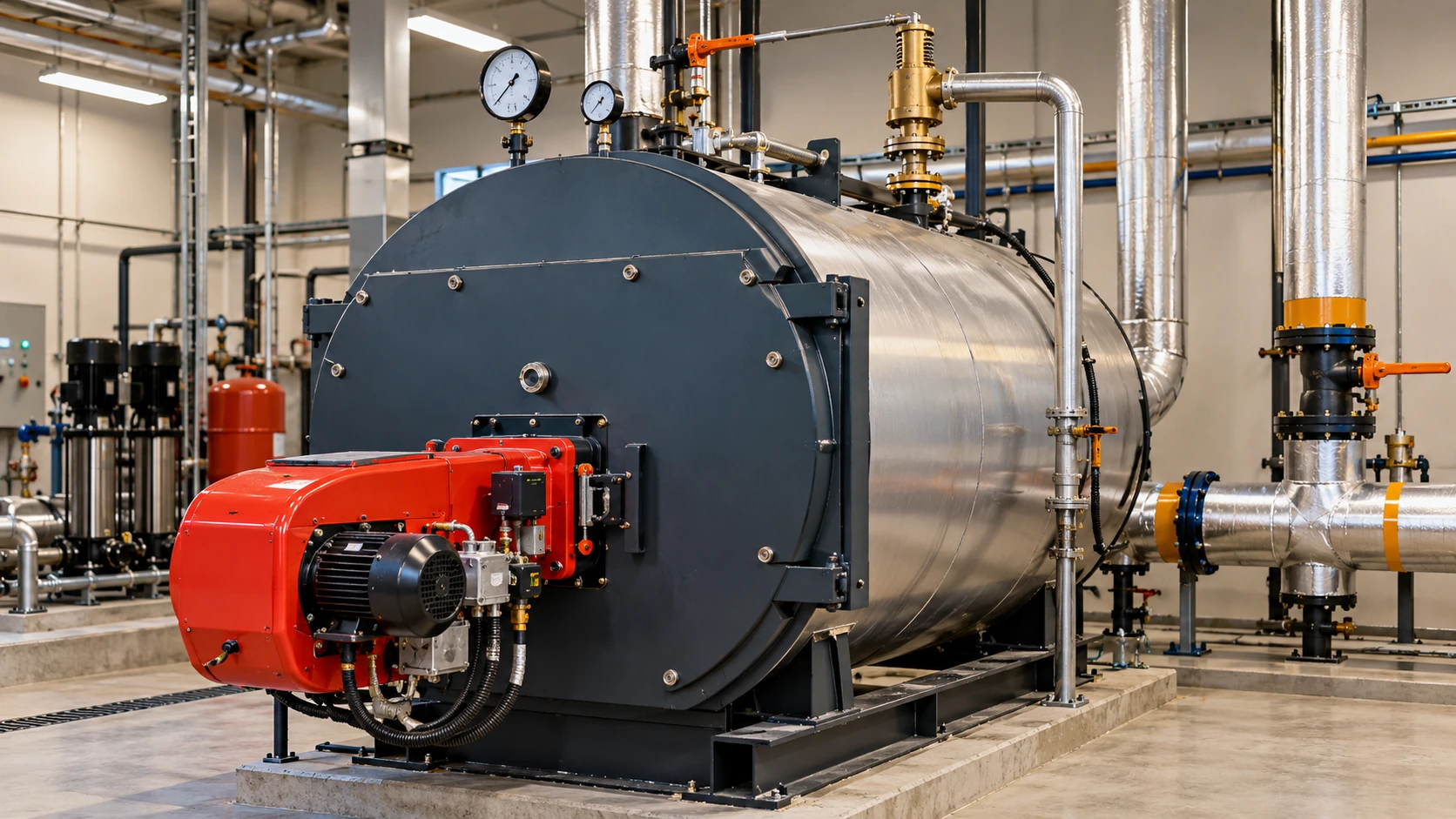
What Is ASME Section IV?
ASME Section IV is a code section that sets construction rules for steam and hot water heating boilers.
Section IV of the ASME Boiler and Pressure Vessel Code is titled Rules for Construction of Heating Boilers. The current edition is the 2025 edition, which replaced the 2023 edition. It is a construction code. It tells the manufacturer how to design, build, test and mark a boiler, and it tells the Authorized Inspector what to verify before a boiler leaves the shop.
Section IV does not cover everything about a heating boiler for life. Operating practice, maintenance and in-service repair sit elsewhere. Care and operation of heating boilers is addressed in Section VI of the Code, and in-service inspection and repair are the territory of the National Board Inspection Code. Section IV is the construction piece only.
The difference between a code, a standard and a specification matters when you read a purchase order. Section IV is a code adopted into law by most jurisdictions. For a refresher on how those three terms differ, read code versus standard versus specification in welding and fabrication.
What Are the Scope Limits of ASME Section IV?
Section IV applies to boilers fired directly by oil, gas, electricity, coal or other solid or liquid fuels. Two service types are covered, and each has its own ceiling. Steam heating boilers must not exceed a maximum allowable working pressure of 15 psig (100 kPa). Hot water heating and hot water supply boilers must not exceed 160 psig (1,100 kPa) and/or a temperature of 250°F (121°C). Potable water heaters are also covered through their own part.
These numbers are the line between Section IV and Section I. A boiler that crosses either limit is a power boiler and must be built to Section I. The table below puts the limits side by side.
| Parameter | Section IV (heating boilers) | Section I (power boilers) |
|---|---|---|
| Steam boiler pressure | Up to 15 psig | Above 15 psig |
| Hot water pressure | Up to 160 psig | Above 160 psig |
| Hot water temperature | Up to 250°F (121°C) | Above 250°F |
| Typical use | Space heating, building hot water | Process steam, power generation |
| Code stamp | H boiler, HV valve | S boiler, V valve |
The limits above are the long-standing scope values, but the wording of the scope clause and its number can move between editions. Check the scope clause of the edition named in your contract before accepting a boiler as a Section IV unit.
Which ASME Section Applies to My Boiler?
The choice follows from the service, pressure and temperature. Use this five-step check before you place an order or start a shop traveler.
- Confirm the unit is a fired boiler, heated by oil, gas, electricity, coal or another fuel, and not an unfired vessel.
- Identify the service: steam, or hot water heating and supply.
- For steam, confirm the maximum allowable working pressure does not exceed 15 psig.
- For hot water, confirm pressure does not exceed 160 psig and temperature does not exceed 250°F.
- If every limit passes, apply Section IV. If any limit is exceeded, apply Section I.
How Is ASME Section IV Organized?
Section IV is organized by Part, and the Part follows the construction method. Part HG holds the general requirements that apply to every heating boiler. The other Parts add rules for the way the boiler is made: fabricated from wrought steel, cast in iron, cast in aluminum, joined by brazing, or built as a potable water heater. The Code also carries mandatory and nonmandatory appendices on topics such as new material approval, safety valve capacity and quality control programs.
| Part | Covers | Typical product |
|---|---|---|
| HG | General requirements: materials, design, safety devices, controls, testing, stamping | All heating boilers |
| HF | Requirements for boilers of wrought materials, including welding rules | Welded steel fire-tube and water-tube boilers |
| HC | Requirements for cast iron boilers | Sectional cast iron boilers |
| HA | Requirements for cast aluminum boilers | Compact cast aluminum hot water boilers |
| HB | Requirements for boilers fabricated by brazing | Brazed copper or steel heat exchanger boilers |
| HLW | Potable water heaters and storage tanks | Domestic hot water heaters |
Part letters and titles are stated from memory of the current layout. Confirm them in the table of contents of your edition, because Parts can be added, merged or renamed.
What Materials and Design Rules Does Section IV Use?
Section IV does not list its own material specifications. It points to Section II, which holds the approved ferrous and nonferrous specifications and allowable stress tables. Plates, tubes, pipe and forgings used in pressure parts must be of listed material, or of material approved through the new material procedure in the Code. The ferrous specifications are described in the ASME Section II Part A reference guide.
Weld metal grouping also leans on Section II and Section IX. When you map a base metal to a qualification group, the ASME P-Number table helps you check that a procedure covers the plate or tube you plan to use.
Design in Section IV is largely rule based. The Code sets minimum plate thickness, tube and pipe sizes, stay and brace rules, opening reinforcement and heating surface requirements. It also requires each boiler to carry safety devices sized to the unit.
Safety devices and controls
- Steam boilers need safety valves set so that pressure never rises above the 15 psig ceiling.
- Hot water boilers need relief valves rated for the boiler output.
- Fired boilers need an automatic low-water fuel cutoff and pressure or temperature controls. The Code spells out where these devices are required and how they are installed.
- Gauges, drains and stop valve rules protect operators during use.
In the editions reviewed, safety valve rules for steam and relief valve rules for hot water sit in Part HG, and control rules for low-water cutoffs sit in Part HG as well. Treat those clause numbers as edition specific and verify them.
How Are Heating Boilers Welded and Fabricated?
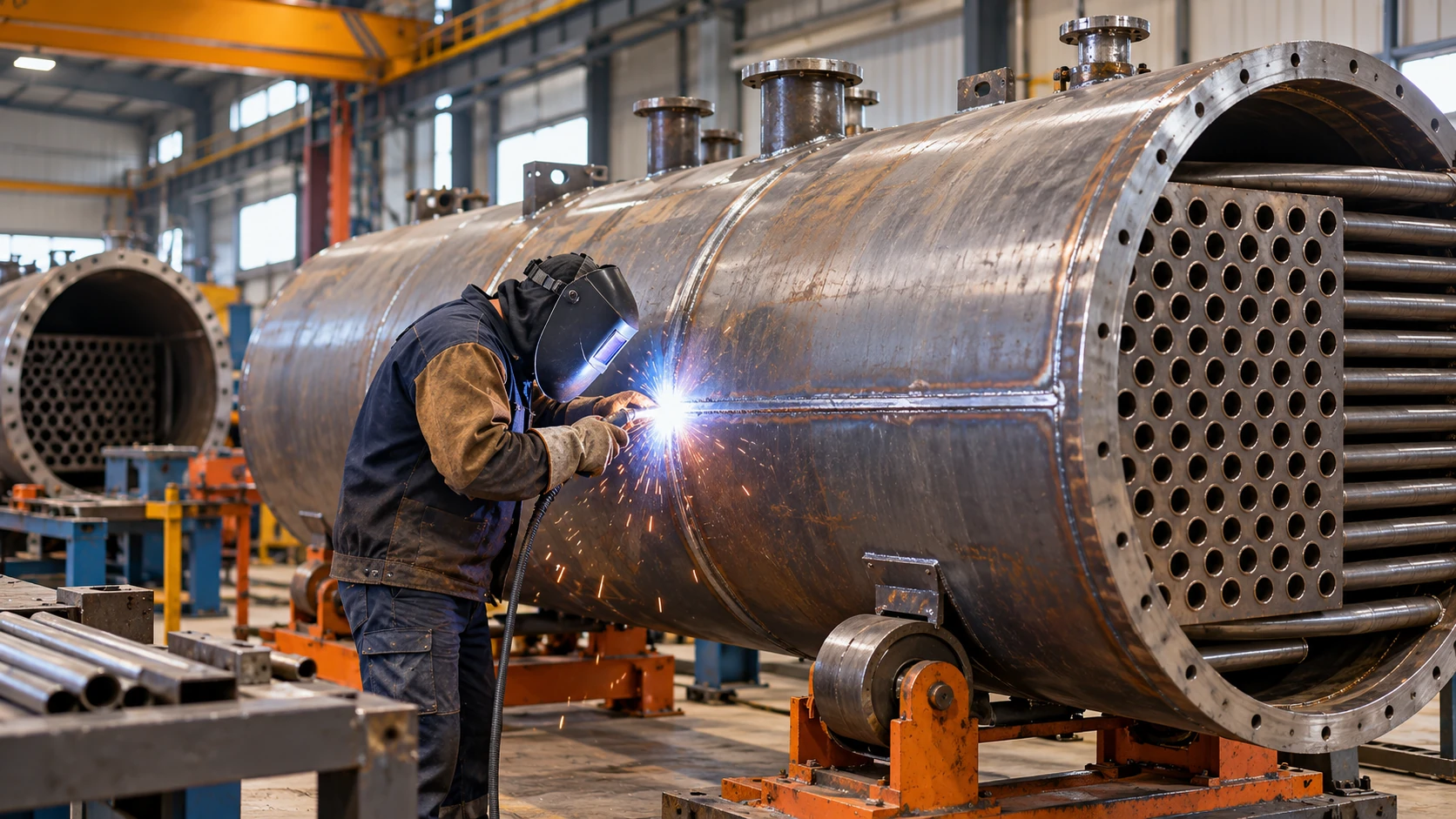
Welded heating boilers must be made by welders and procedures qualified to Section IX. The manufacturer holds a qualified welding procedure, backed by a procedure qualification record, and every welder or operator holds a performance qualification for the process and position. If those terms are fuzzy, read the breakdown of WPS versus PQR versus WPQ. For the actual qualification variables, see ASME Section IX Part QW.
Heating boilers are often welded from thin plate and tube. Distortion control, fit-up and clean weld edges matter more than heavy heat input rules. The Authorized Inspector reviews the procedure documents and checks that each weld in the pressure boundary ties back to a qualified welder.
Repairs on a boiler before it is stamped must follow the same code rules as the original work. The principles for planning and documenting a repair are covered in weld repair procedure under ASME code requirements.
Heating boilers use less radiography and volumetric testing than Section I power boilers. When examination is required, the methods and acceptance are tied to Section V. A summary of those methods is in the ASME Section V nondestructive examination overview.
How Are Heating Boilers Tested and Stamped?
Every new Section IV boiler is proof tested before shipment, usually by hydrostatic test. The Code sets the minimum test pressure by service. In the editions reviewed, steam boilers carry a fixed minimum pressure stated in the hydrostatic test clause, and hot water boilers are tested at 1.5 times the maximum allowable working pressure, with a limit on how far pressure may overshoot. Cast iron sectional boilers follow their own test rules, and the Code also allows a pneumatic test in lieu of hydrostatic only through a Code Case with strict conditions.
The pressure gauge range, hold time and temperature of test water all affect the test. Method differences between water and gas are explained in hydrostatic versus pneumatic pressure testing. To estimate pressures from a formula, use the hydrotest pressure calculator, and for tube or shell capacity check with the burst pressure calculator. Both tools suit planning only; the Code governs.
Inspection, data reports and stamping
An Authorized Inspector witnesses the test and reviews the manufacturer data report. A boiler that passes receives the Certification Mark. Section IV uses these marks:
- H mark for heating boilers.
- HV mark for safety and relief valves used on heating boilers.
- HLW mark for potable water heaters and storage tanks.
The manufacturer must hold an ASME Certificate of Authorization to apply a mark, and the shop must run a quality control system that the Code describes. In most jurisdictions the boiler is also registered with the National Board, which records the unit and its data report.
What Are Common Mistakes and Limits of This Guide?
- Quoting a clause from an old edition. Clause numbers shift. A 2019 citation may not match the 2025 text.
- Ignoring the contract edition. The edition and addenda listed in the purchase specification control the job, not the newest book.
- Treating 160 psig as the only hot water limit. Temperature, 250°F, is an independent boundary and the scope uses both.
- Applying Section VIII to a fired boiler. Direct firing and steam generation pull the unit into a boiler code.
- Using a power boiler valve on a heating boiler by habit. The valve mark must match the equipment code.
- Assuming construction rules cover service. Section IV ends at construction. Operation and repair fall to other documents.
This page is an engineering overview, not a substitute for the Code. Always read the clause itself, in the edition and addenda stated in the contract specification, and follow the jurisdiction rules where the boiler is installed.
Quick Reference: Section IV at a Glance
| Item | Rule of thumb |
|---|---|
| Steam limit | 15 psig (100 kPa) MAWP |
| Hot water limit | 160 psig (1,100 kPa) and/or 250°F (121°C) |
| Material source | Section II specifications |
| Welding rules | Section IX qualifications |
| NDE methods | Section V |
| Hydro test, hot water | 1.5 x MAWP (edition dependent) |
| Marks | H, HV, HLW |
| Operation guidance | Section VI |
Key Terms
- Heating boiler
- A fired closed vessel that makes low-pressure steam or heats water for space or process heating within Section IV limits.
- MAWP
- Maximum allowable working pressure, the highest gauge pressure a boiler may carry at its coincident temperature.
- Authorized Inspector
- A commissioned person who verifies that construction, testing and documents meet the Code before stamping.
- Certification Mark
- The ASME mark, such as H, HV or HLW, applied under a Certificate of Authorization.
- Data report
- The manufacturer record that lists design data, materials, tests and inspector sign-off for each boiler.
- Low-water fuel cutoff
- A control that stops firing when water falls below a safe level in the boiler.
- Potable water heater
- A heater that supplies domestic hot water and is built to the HLW rules.
Standards and References
- ASME Boiler and Pressure Vessel Code, Section IV, Rules for Construction of Heating Boilers, 2025 edition, published by ASME.
- ASME BPVC Section II (materials), Section V (nondestructive examination), Section VI (care and operation of heating boilers) and Section IX (welding qualifications).
- National Board Inspection Code and registration data, from the National Board of Boiler and Pressure Vessel Inspectors.
Frequently Asked Questions
What is ASME Section IV used for?
ASME Section IV gives the construction rules for heating boilers. It covers design, materials, fabrication, safety devices, testing, inspection and stamping of steam boilers up to 15 psig and hot water boilers up to 160 psig and/or 250 F, plus potable water heaters.
What is the pressure limit for a Section IV steam boiler?
A steam heating boiler built to Section IV may not exceed a maximum allowable working pressure of 15 psig (100 kPa). A steam boiler above that pressure is a power boiler and must be built to Section I.
What are the hot water limits in ASME Section IV?
Hot water heating and hot water supply boilers are limited to 160 psig (1,100 kPa) and/or 250 F (121 C). If either the pressure or the temperature limit is exceeded, the boiler falls outside Section IV and moves to Section I.
What is the difference between Section I and Section IV?
Section I covers power boilers operating above the heating boiler limits, with stricter examination and design rules. Section IV covers low-pressure heating boilers and water heaters. Stamps differ too: S and V for Section I, H and HV for Section IV.
Which code stamps does Section IV use?
Section IV uses the H mark for heating boilers, the HV mark for safety and relief valves used on heating boilers, and the HLW mark for potable water heaters and storage tanks. A manufacturer needs an ASME Certificate of Authorization to apply a mark.
Does Section IV cover boiler operation and repair?
No. Section IV is a construction code. Care and operation of heating boilers is covered in Section VI, and in-service inspection, alteration and repair are covered by the National Board Inspection Code and jurisdiction rules.
How is a Section IV boiler pressure tested?
Boilers are normally hydrostatically tested before shipment, with the minimum test pressure set by service type. Hot water boilers are generally tested at 1.5 times MAWP in the editions reviewed. Confirm the exact pressure and any pneumatic option in your contract edition.
Conclusion
ASME Section IV gives heating boilers a clear construction framework: steam to 15 psig, hot water to 160 psig and/or 250°F, materials from Section II, welding qualified under Section IX and proof tests witnessed by an Authorized Inspector before the H, HV or HLW mark is applied. Know the limits, confirm the edition and keep the data report with the boiler. To test what you have learned, try the ASME Section IX quiz and the ASME Section VIII Div 1 quiz, then continue with the related guides below.