What Is Critical Cooling Rate in Welding?
Last updated:
Quick Answer: Critical cooling rate is the slowest rate at which a steel can cool from an austenitic condition while still forming martensite, rather than softer, tougher constituents such as ferrite, pearlite, or bainite. In welding, the actual cooling rate through the 800-500°C range, commonly written as t8/5, governs which of these microstructures actually forms in the weld metal and HAZ, and is controlled primarily through heat input, preheat and interpass temperature, and plate thickness.
Two welds made with the same steel, the same filler metal, and the same joint design can end up with completely different hardness and toughness if one cools faster than the other. The reason is almost always the same: cooling rate through a specific temperature window determines which microstructure the austenite transforms into as the weld and its heat-affected zone cool back down to room temperature. Critical cooling rate is the threshold that separates a tough, weldable microstructure from a hard, crack-sensitive one.
This guide defines critical cooling rate precisely, connects it to the continuous cooling transformation (CCT) diagram and the t8/5 cooling time concept used throughout welding engineering, and explains the practical levers, heat input, preheat, and joint geometry, used to control it in the field.
- Critical cooling rate is the slowest cooling rate that still produces martensite from austenite in a given steel.
- In welding, cooling rate is most commonly characterized by t8/5, the time taken to cool from 800°C to 500°C, because this range governs the austenite-to-ferrite/bainite/martensite transformation for most structural and pressure vessel steels.
- Higher heat input and higher preheat/interpass temperature both slow the cooling rate, pushing the resulting microstructure toward softer, tougher ferrite and bainite rather than martensite.
- Thicker plate cools faster than thin plate at the same heat input, because more surrounding cold mass is available to conduct heat away, up to the point where the plate is thick enough to be treated as an effectively infinite heat sink.
- A steel’s hardenability, closely related to its carbon equivalent, determines how slow the cooling rate must be to avoid martensite formation; higher-hardenability steels need slower cooling (or higher preheat) to stay out of the martensite region.
What Is Critical Cooling Rate?
Critical cooling rate is the slowest rate at which a steel can be cooled from its austenitizing temperature and still transform entirely, or predominantly, to martensite, rather than to softer transformation products such as ferrite, pearlite, or bainite. Cool faster than this rate and the steel hardens to martensite; cool slower and some or all of the austenite instead transforms into softer, more ductile constituents.
This concept originates in heat treating, where it describes the quench severity needed to fully harden a given steel. In welding, the same physical transformation happens in reverse-engineered form: rather than choosing a quench medium, the welding engineer is managing the cooling rate that naturally occurs as heat conducts away from the weld into the surrounding, comparatively cold base metal.
Why this matters practically: A cooling rate at or above a steel’s critical cooling rate produces martensite in the weld metal and HAZ. Depending on the steel’s carbon and alloy content, that martensite can be hard and brittle enough to be highly susceptible to hydrogen-assisted cold cracking, particularly in the presence of diffusible hydrogen and joint restraint. Managing cooling rate below the critical value, or ensuring any martensite that forms is adequately tempered, is a central goal of preheat and heat input selection.
Critical Cooling Rate on a CCT Diagram
A continuous cooling transformation (CCT) diagram plots temperature against time (typically on a logarithmic scale) and shows the regions where austenite transforms into ferrite, pearlite, bainite, or martensite as a function of cooling rate. Overlaid cooling curves, each representing a different cooling rate, show which transformation product (or mixture of products) results from each rate.
The critical cooling rate corresponds to the specific cooling curve that just misses the ferrite and pearlite transformation “noses” on the diagram, the fastest curve that would still allow some softer transformation to begin, and any curve steeper (faster) than it transforms fully to martensite. Curves that cool more slowly than this critical curve pass through the ferrite, pearlite, or bainite fields before reaching the martensite start temperature, producing a mixed or fully non-martensitic microstructure instead.
Why Welding Uses t8/5 Instead of a Single Cooling Rate
A weld does not cool at a single constant rate; the cooling rate itself changes continuously as temperature falls. To make cooling behavior practical to specify and measure, welding engineering commonly characterizes it as a cooling time through a defined temperature band rather than a single instantaneous rate.
The most widely used metric is t8/5, the time in seconds for a given point in the weld or HAZ to cool from 800°C to 500°C. This particular range is used because it spans the temperature region where austenite decomposition into ferrite, bainite, or martensite predominantly occurs for most structural and pressure vessel steels, making it the most metallurgically meaningful window to control.
| Metric | Temperature Range | Primary Purpose |
|---|---|---|
| t8/5 | 800°C to 500°C | Governs austenite decomposition to ferrite, bainite, or martensite; the primary metric for HAZ hardness and toughness prediction |
| t3/1 (or similar low-temperature metrics) | Approximately 300°C to 100°C | Used in some methods to characterize hydrogen diffusion and cold cracking risk in addition to t8/5 |
A shorter t8/5 (faster cooling) pushes the resulting microstructure toward harder constituents, potentially including martensite; a longer t8/5 (slower cooling) favors softer ferrite and allows more time for grain growth, which can reduce toughness through a different mechanism if taken too far. This is why cooling rate control in welding is a balance, not a simple “slower is always better” rule.
What Controls Cooling Rate in a Weld?
Three factors dominate the actual cooling rate, and therefore t8/5, experienced by a given weld:
- Heat input. Higher heat input (a function of welding current, voltage, and travel speed) deposits more energy per unit length of weld, heating a larger volume of surrounding material and slowing the subsequent cooling rate.
- Preheat and interpass temperature. Raising the starting temperature of the base metal reduces the temperature difference driving heat conduction away from the weld, directly slowing the cooling rate through the critical range.
- Plate thickness and joint geometry. Thicker material, and joint geometries with more surrounding cold mass (such as a T-joint compared to a butt joint of the same thickness), conduct heat away faster, increasing cooling rate for the same heat input and preheat.
Classical heat flow theory, following Rosenthal’s analytical solutions widely used in welding engineering, expresses this relationship in two limiting forms depending on plate thickness relative to heat input:
Caution: These are classical analytical relationships describing general trends, not precise numerical predictors on their own; actual thermal conductivity, specific heat, and transition thickness between thin-plate and thick-plate behavior are material- and geometry-specific. Practical t8/5 estimation in the field uses empirical formulas from standards such as EN 1011-2, calibrated software, or direct thermocouple measurement rather than these proportional relationships alone.
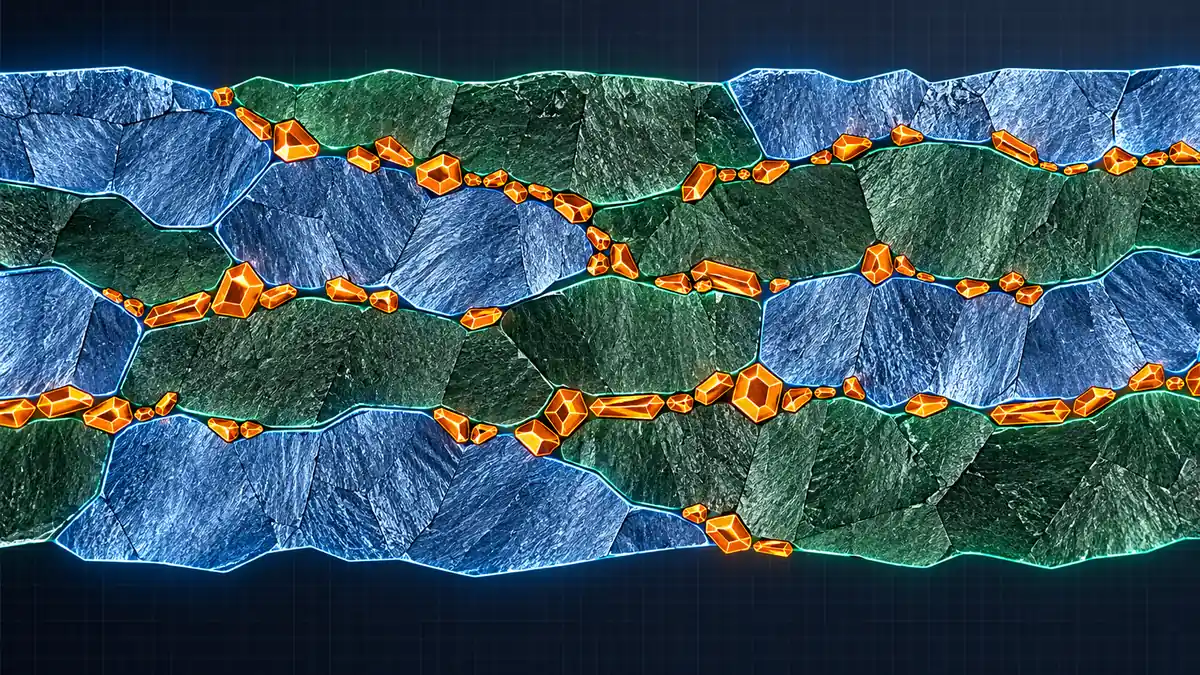
Thick Plate vs Thin Plate Heat Flow
Thin plate conducts heat mainly in two dimensions, spreading outward through the plane of the plate; thick plate conducts heat in three dimensions, spreading in a roughly hemispherical pattern away from the weld. The practical consequence is that, up to a transition thickness, increasing plate thickness increases cooling rate because more surrounding cold material is available as a heat sink in every direction, not just within the plane of the plate.
Beyond a certain thickness, however, further increases in thickness stop meaningfully accelerating cooling, because the weld’s heat-affected zone can no longer “reach” the far side of the plate during the relevant cooling window; the plate behaves as an effectively infinite heat sink for practical purposes at that point. This transition thickness depends on heat input, material thermal properties, and preheat temperature, which is why the same nominal plate thickness can behave as thin plate under high heat input and thick plate under low heat input.
Hardenability and Carbon Equivalent
Whether a given cooling rate actually produces martensite depends not only on the cooling rate itself but on the steel’s hardenability, its inherent tendency to form martensite at a given cooling rate. Higher hardenability steels have a slower critical cooling rate, meaning they can form martensite even under comparatively gentle cooling conditions that would leave a lower-hardenability steel largely ferritic.
Hardenability is strongly correlated with carbon and alloy content, which is why carbon equivalent formulas are used throughout welding engineering as a practical proxy: a higher carbon equivalent steel generally has a slower (more easily reached) critical cooling rate, requiring a slower actual weld cooling rate, achieved through higher preheat or higher heat input, to avoid untempered martensite formation.
Field tip: Preheat and interpass temperature selection tables in welding procedure specifications are, in effect, a practical translation of this relationship: they specify the minimum starting temperature needed to slow cooling rate below the critical value for a steel of a given carbon equivalent and section thickness, without requiring the welding engineer to work through the underlying heat flow calculation on every job.
Quick Reference: Cooling Rate Levers
| Variable | Increase the Variable | Effect on Cooling Rate |
|---|---|---|
| Heat input | Higher current/voltage, slower travel speed | Slower cooling rate (longer t8/5) Softer microstructure |
| Preheat / interpass temperature | Higher starting temperature | Slower cooling rate (longer t8/5) Softer microstructure |
| Plate thickness (below transition thickness) | Thicker material | Faster cooling rate (shorter t8/5) Harder microstructure risk |
| Joint restraint / surrounding mass | More surrounding cold material (e.g. T-joint vs butt joint) | Faster cooling rate (shorter t8/5) Harder microstructure risk |
| Carbon equivalent of the steel | Higher carbon equivalent | Slower critical cooling rate required to avoid martensite Needs more preheat |
Common Mistakes and Limitations
- Treating “slower is always safer” as a universal rule. Excessively slow cooling can promote grain coarsening and, in some low-alloy and creep-resistant steels, can reduce toughness or promote unwanted microstructures of its own; cooling rate control is a target window, not an open-ended minimum.
- Using a single cooling rate number without specifying the temperature range. Because cooling rate changes continuously as the weld cools, a bare “cooling rate” figure is ambiguous; t8/5 (or another clearly defined temperature-band cooling time) should always be specified.
- Ignoring joint geometry effects on cooling rate. The same plate thickness and heat input can produce meaningfully different cooling rates in a butt joint versus a fillet weld on a heavily restrained T-joint, due to the difference in surrounding heat-sink mass.
- Assuming the thick-plate/thin-plate transition is fixed. The thickness at which a plate stops behaving as an effectively infinite heat sink shifts with heat input and preheat temperature; a plate that behaves as “thick” at low heat input can behave as “thin” at high heat input.
- Relying on proportional heat-flow relationships for precise numerical prediction. The classical Rosenthal-derived relationships describe general trends well but are not a substitute for calibrated empirical t8/5 formulas, welding procedure qualification testing, or direct measurement when a precise cooling time value is required.
Specific preheat and heat input requirements depend on the material specification and welding procedure applicable to your project; confirm actual cooling rate control requirements against the governing code and welding procedure specification.
Key Terms
- Critical Cooling Rate
- The slowest cooling rate that still produces martensite from austenite in a given steel.
- t8/5
- The time taken to cool from 800°C to 500°C, the standard metric used in welding to characterize cooling rate through the temperature range most relevant to austenite decomposition.
- Continuous Cooling Transformation (CCT) Diagram
- A diagram plotting the microstructural transformation products of a steel as a function of continuous cooling rate from austenite.
- Hardenability
- A steel’s inherent tendency to form martensite at a given cooling rate, strongly correlated with carbon and alloy content.
- Carbon Equivalent (CE)
- An empirical formula combining a steel’s alloying content into a single value used to estimate hardenability, preheat requirements, and cracking susceptibility.
- Heat Input
- The energy delivered per unit length of weld, a function of current, voltage, and travel speed, directly affecting cooling rate.
Frequently Asked Questions
What is critical cooling rate in simple terms?
Critical cooling rate is the slowest speed at which a steel can cool from an austenitic condition and still transform mainly to martensite. Cooling any slower than this rate allows softer, tougher microstructures such as ferrite, pearlite, or bainite to form instead of martensite.
Why does welding use t8/5 instead of a single cooling rate value?
A weld’s cooling rate changes continuously as it cools, so a single instantaneous rate is not a practical or complete description. t8/5, the time to cool from 800 to 500 degrees Celsius, captures the cooling behavior over the specific temperature range where austenite decomposition into ferrite, bainite, or martensite predominantly occurs, making it a more useful and metallurgically meaningful metric.
Does higher heat input always produce a safer weld?
Not necessarily. Higher heat input slows cooling rate, which generally reduces the risk of hard, crack-sensitive martensite forming, but excessively slow cooling from very high heat input can promote grain coarsening and reduce toughness through a different mechanism. Heat input is typically specified within a qualified range rather than maximized without limit.
Why does plate thickness affect cooling rate?
Thicker plate, up to a transition thickness, provides more surrounding cold material to conduct heat away from the weld in three dimensions, increasing cooling rate compared to thin plate, which can only conduct heat within its own plane. Beyond that transition thickness, further increases in thickness no longer meaningfully increase cooling rate, because the plate already behaves as an effectively infinite heat sink for the relevant cooling window.
How is carbon equivalent related to critical cooling rate?
Carbon equivalent is an empirical proxy for a steel’s hardenability. A higher carbon equivalent generally means a slower critical cooling rate, meaning the steel can form martensite even under relatively gentle cooling, which is why higher carbon equivalent steels typically require higher preheat temperatures to keep the actual weld cooling rate below the critical value.
Can critical cooling rate be measured directly on a real weld?
The actual cooling rate or t8/5 experienced by a specific weld can be measured directly using thermocouples or thermal imaging during welding procedure qualification testing. The critical cooling rate for the material itself is typically determined separately, through dilatometry or CCT diagram data specific to the steel grade, and then compared against the measured or calculated weld cooling rate.
Standards and References
- EN 1011-2, Welding – Recommendations for welding of metallic materials – Part 2: Arc welding of ferritic steels, European Committee for Standardization – empirical t8/5 estimation methods and preheat guidance.
- Kou, S., Welding Metallurgy, Wiley – reference for Rosenthal-based analytical heat flow relationships and continuous cooling transformation behavior in welding.
- AWS D1.1/D1.1M, Structural Welding Code – Steel, American Welding Society – preheat and interpass temperature requirements informed by cooling rate and carbon equivalent considerations.
Conclusion
Critical cooling rate is the hinge point between a tough, weldable microstructure and a hard, crack-sensitive one, and every major welding variable, heat input, preheat, interpass temperature, plate thickness, and joint geometry, ultimately acts by pushing the actual weld cooling rate above or below that threshold. The t8/5 concept turns this into something a welding engineer can actually specify and measure on a real joint, and carbon equivalent turns the material side of the equation into a number that can be looked up rather than calculated from first principles on every job. Understanding the relationship, rather than just following a preheat table, is what lets an engineer troubleshoot a cracking problem or adapt a procedure to an unusual joint configuration with confidence. For related topics, see the Ac1/Ac3/Ms/Mf transformation temperatures guide and the high-temperature material properties guide on WeldFabWorld.
About This Guide: This article was prepared by the WeldFabWorld technical team from the references listed above. Cooling rate behavior is material- and geometry-specific; verify actual preheat, interpass, and heat input requirements against the specific welding procedure specification and code edition governing your project.