Laser vs TIG vs MIG Welding: Which Process Should You Choose?
Last updated:
Quick Answer: Choose laser welding for thin sheet, precision parts, and high-volume production where fit-up is tight and low distortion matters most. Choose TIG for the cleanest, most controllable welds on aluminium, stainless steel, and thin or cosmetic work, accepting slower speed and higher skill demand. Choose MIG (GMAW) for structural and general fabrication, thicker material, variable fit-up, and fast, easily automated deposition. No process is best overall; the right one depends on material, thickness, volume, appearance, fit-up, budget, and whether the governing code accepts it.
Laser, TIG, and MIG welding all join metal by fusion, but they get there in very different ways, and those differences decide which one suits a given job. A laser concentrates energy into a tiny spot, TIG gives a skilled welder fine control of a small puddle, and MIG feeds a consumable wire at speed. Each wins in some conditions and loses badly in others, so the useful question is not which process is best, but which one fits the work in front of you.
This guide compares the three on heat input and distortion, speed, fit-up tolerance, material and thickness range, automation, cost, and code and safety considerations, then turns the comparison into a practical decision guide. Where figures such as thickness limits come from equipment manufacturers, they are treated as indicative rather than universal, because they vary with laser power, system type, and material.
- Laser welding delivers a very concentrated heat source, producing deep, narrow welds with a small heat-affected zone and low distortion, but it needs tight, consistent fit-up and has high equipment cost.
- TIG offers the finest puddle control and the cleanest welds on aluminium, stainless steel, and thin material, but it is the slowest of the three and demands the most operator skill.
- MIG is the fastest to learn and to automate, tolerates imperfect fit-up and thicker material, and suits structural work, but produces more spatter and a less refined bead appearance.
- Because laser welding is a low-heat-input, rapid-cooling process, hardenable steels can pick up hard microstructures, so metallurgy and cooling rate still need attention.
- For code work, confirm the governing code and customer specification accept the process and how it must be qualified before selecting it; laser welding is covered by fewer procedure-qualification frameworks than arc welding.
How the Three Processes Differ
The three processes differ mainly in their heat source and how they add filler: a laser uses a focused beam of light, TIG uses an arc from a non-consumable tungsten electrode with separately fed filler, and MIG uses an arc through a continuously fed consumable wire that is both electrode and filler.
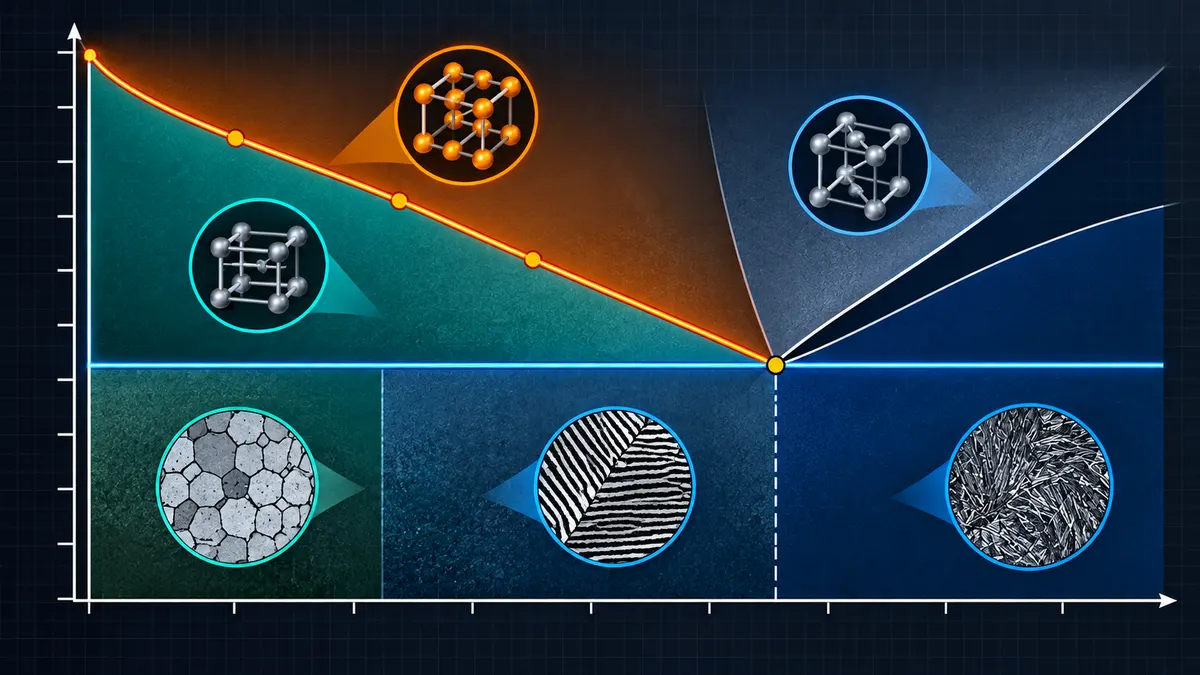
- Laser beam welding (LBW) concentrates energy into a very small spot, a high-power-density fusion process that produces high-aspect-ratio welds (deep and narrow) with comparatively low heat input. It may be autogenous or use added wire.
- TIG (GTAW) uses a tungsten electrode that is not consumed, with filler metal added by hand or wire feeder into a puddle the welder controls closely.
- MIG (GMAW) uses a consumable wire fed through the torch, which carries the arc and becomes part of the weld, giving high deposition rates.
Laser Welding: Strengths and Limits
Strengths
- Low distortion and small HAZ: Because energy is delivered to a very small area, less surrounding metal is heated, which typically means less warping and less post-weld finishing than arc welding on thin material.
- Speed on thin sheet: Travel speeds on thin sections are typically high, which is why laser welding is common in high-volume precision manufacturing.
- Narrow, clean seams: Narrow beads suit visible parts and tight-tolerance assemblies.
Limits
- Tight fit-up: A very small focused spot tolerates little joint gap or misalignment, so parts must be prepared and fixtured accurately.
- Thickness range: Handheld laser systems are generally marketed for thin to medium sections; manufacturers commonly quote limits in the range of a few millimetres up to roughly 8 mm, depending on power. Higher-power industrial and robotic systems reach further, but the concentrated heat source is not the natural choice for heavy multi-pass sections.
- Reflective materials: Highly reflective metals can be harder to weld with some laser types, depending on wavelength and power.
- Cost and services: Equipment cost is high, and lasers need substantial electrical power and appropriate fume extraction and safety measures.
TIG Welding: Strengths and Limits
Strengths
- Puddle control and finish: The welder controls heat and filler independently, producing clean, precise, low-spatter welds, which is why TIG is preferred where appearance and precision matter.
- Material range: Excellent on stainless steel, aluminium, and thin material, and suitable for critical root passes.
- Thin-section tolerance: Fine current control makes it well suited to thin wall and delicate work.
Limits
- Slow deposition: TIG is the slowest of the three for most work, so it is poor value for long production seams.
- Skill demand: Coordinating torch, filler, and heat takes practice, and results depend heavily on the operator.
- Wider heat spread than laser: To keep a stable pool on thin sheet, arc processes need enough current and dwell time, which can mean a wider HAZ and more distortion on long seams.
MIG Welding: Strengths and Limits
Strengths
- Productivity: Continuous wire feed gives high deposition rates and long uninterrupted welds.
- Tolerance and flexibility: MIG handles inconsistent fit-up, thicker materials, and a wide variety of joints and positions.
- Ease of learning and automation: With fewer variables to control, MIG is easier to learn and to automate than TIG or laser.
Limits
- Spatter and appearance: More spatter and a less refined bead than TIG or laser, often needing cleanup on visible work.
- Thin material: MIG can weld thin stainless and aluminium, but it is less forgiving than TIG and raises burn-through risk.
- Distortion: Heat input is higher than laser, so thin, long seams can warp.
Head-to-Head Comparison
| Factor | Laser | TIG | MIG |
|---|---|---|---|
| Heat source | Focused laser beam | Arc, non-consumable tungsten | Arc, consumable wire |
| Heat input / HAZ | Lowest, narrow HAZ | Moderate, controllable | Highest of the three, wider HAZ |
| Distortion on thin sheet | Lowest | Low to moderate | Moderate to higher |
| Speed | Very high on thin sheet | Slowest | High |
| Fit-up tolerance | Tight, low tolerance Demanding | Moderate | Most tolerant Forgiving |
| Thickness suitability | Thin to medium (system dependent) | Thin to medium | Thin to thick |
| Weld appearance | Very clean, narrow | Cleanest, most controllable | More spatter, less refined |
| Operator skill | Lower for handheld, but setup and safety training needed | Highest | Lowest |
| Equipment cost | Highest | Moderate | Lowest to moderate |
| Ease of automation | Needs accurate path and more variables Complex | Similar complexity | Easiest |
Decision Guide by Application
| Application | Usually Favored | Why |
|---|---|---|
| High-volume thin stainless or sheet parts, visible seams | Laser | Speed, low distortion, minimal finishing, when fit-up is controlled |
| Aluminium or stainless fabrication, cosmetic or precision work, low volume | TIG | Best puddle control and finish |
| Critical root passes and thin-wall pipe or tube | TIG | Fine heat and filler control |
| Structural steel, frames, repair, general fabrication | MIG | Deposition rate, fit-up tolerance, thicker sections |
| Variable joint gaps, field or shop conditions | MIG | Most forgiving of imperfect fit-up |
| Tight-tolerance assemblies where warping must be minimal | Laser | Small HAZ and low heat input |
| Heavy, thick-section multi-pass work | MIG or other arc processes | Laser’s concentrated heat source is a poor fit for heavy multi-pass joints |
Heat Input, HAZ, and Metallurgy
Low heat input is usually an advantage, since it shrinks the HAZ and limits distortion. But it also means very fast cooling, and in hardenable steels fast cooling can form hard, brittle microstructures in the weld and HAZ. The same cooling-rate principles that govern preheat and heat input for arc welding, covered in the critical cooling rate guide, apply to laser welds, often more severely because the cooling is so rapid.
- Low-carbon and austenitic stainless steels: Generally tolerant of laser welding’s fast cooling, which is one reason thin stainless is a common laser application.
- Hardenable carbon and alloy steels: May need attention to hardness and cracking risk, and possibly preheat or post-weld treatment as the procedure and code require.
- Aluminium: Can be laser welded, but its reflectivity and thermal conductivity make process setup more demanding.
Caution: A small HAZ does not automatically mean a better weld. On hardenable steels, the narrow, rapidly cooled zone can be harder and less tough than an arc-welded HAZ. Verify mechanical properties through procedure qualification rather than assuming low heat input is always safer.
Automation and Operator Skill
MIG is generally the easiest to automate: the main variables to control are travel speed, voltage, amperage, torch angle, and work angle, and the process is well understood after decades of use. Automating laser welding needs a robot with excellent path accuracy and repeatability, and there are more process factors to manage; TIG is similar in this respect.
Operator skill points the other way for handheld work. Handheld laser welders are often promoted as easier to learn than TIG for thin material, but they bring their own training needs, mainly setup discipline, fit-up control, and laser safety. TIG remains the most skill-dependent manual process, and MIG the least.
Codes, Qualification, and Safety
For code work, the process must be one the governing code and the customer specification allow, and the procedure and welders or operators must be qualified accordingly. Arc processes such as TIG and MIG are covered by nearly every fabrication code and have well-established qualification routes. Laser welding is accepted by fewer codes and qualification frameworks, so confirm acceptance and the qualification requirements early, before committing to equipment.
Laser safety: Laser welding adds hazards beyond arc welding, principally laser radiation (which can injure eyes and skin, including from reflected beams), plus fumes and electrical hazards. Suitable enclosure or barriers, laser-rated eye protection, interlocks, fume extraction, and trained personnel are required. Laser safety programs are typically based on standards such as ANSI Z136.1, in addition to general welding safety practice.
Quick Reference
| Process | Best For | Main Limitation |
|---|---|---|
| Laser | Thin sheet, precision, high-volume production | High cost and tight fit-up requirement |
| TIG | Aluminium, stainless, cosmetic and precision fabrication, root passes | Slow, highest skill demand |
| MIG | Structural steel, general fabrication, repair, production | More spatter, less refined appearance |
Common Mistakes and Limitations
- Buying laser for the wrong job. A laser that excels at thin-sheet production can be a poor investment for structural or heavy fabrication with variable fit-up.
- Ignoring fit-up. Laser welding’s small spot cannot bridge gaps the way MIG can; poor fit-up produces defects or rework regardless of laser power.
- Assuming low heat input is always better. Rapid cooling can harden hardenable steels; qualify the weld rather than trusting the small HAZ alone.
- Using MIG on thin, cosmetic stainless without allowing for finishing. MIG can weld it but with higher burn-through risk and more spatter, so add finishing time to the comparison.
- Selecting a process before checking code acceptance. Confirm that the governing code and customer specification accept the process and how it is qualified.
- Treating vendor performance figures as universal. Thickness and speed claims from equipment makers depend on laser power, material, and setup; verify with weld trials on your parts.
Requirements depend on the governing code, material, and project specification; confirm process acceptance and qualification requirements before selecting a process for production or code work.
Key Terms
- Laser Beam Welding (LBW)
- A fusion welding process that uses a focused laser beam as a high-power-density heat source, producing deep, narrow welds with low heat input.
- TIG (GTAW)
- Gas tungsten arc welding, using a non-consumable tungsten electrode and separately added filler metal.
- MIG (GMAW)
- Gas metal arc welding, using a continuously fed consumable wire that serves as both electrode and filler.
- Heat-Affected Zone (HAZ)
- The part of the base metal that is not melted but whose microstructure and properties are changed by the heat of welding.
- Autogenous Weld
- A fusion weld made without added filler metal, common in laser and some TIG applications.
- Fit-Up
- The alignment and gap of joint members before welding, to which laser welding is far more sensitive than MIG.
- Aspect Ratio
- The ratio of weld depth to width; laser welds have a high aspect ratio, meaning deep and narrow.
Frequently Asked Questions
Is laser welding better than TIG or MIG?
Not universally. Laser welding is better for thin sheet, precision parts, and high-volume production with tight fit-up because of its low distortion and speed. TIG is better for controllable, cosmetic welds on aluminium and stainless, and MIG is better for structural work, thicker material, and variable fit-up. The best process depends on the job.
What is the main advantage of laser welding over arc welding?
Laser welding concentrates energy into a very small area, producing deep, narrow welds with a small heat-affected zone and low distortion. This typically reduces warping and post-weld finishing compared with arc welding on thin material, and allows high travel speeds.
Which process is best for thin stainless steel?
Laser and TIG are both strong choices. Laser suits high-volume production with controlled fit-up and minimal distortion, while TIG suits lower-volume, cosmetic, or precision work with the most puddle control. MIG can weld thin stainless but is less forgiving and carries a higher burn-through risk.
Can laser welding replace MIG for structural fabrication?
Generally not. Structural fabrication often involves thicker material, variable fit-up, and multi-pass joints, where MIG’s tolerance, deposition rate, and flexibility are more practical. Laser’s tight fit-up requirement and concentrated heat source suit thin, precisely prepared parts better.
Why is TIG slower than MIG?
TIG uses a non-consumable electrode with filler added separately, and the welder controls a small puddle carefully, so deposition is slow. MIG feeds consumable wire continuously, giving much higher deposition rates and long uninterrupted welds, at the cost of less puddle control and a rougher finish.
Is laser welding accepted by welding codes?
Acceptance varies. Arc processes like TIG and MIG are covered by nearly every fabrication code, while laser welding is covered by fewer codes and qualification frameworks. Before choosing laser for code work, confirm that the governing code and customer specification allow it and how the procedure and operators must be qualified.
What safety issues are specific to laser welding?
Laser welding adds laser radiation hazards, including risk of eye and skin injury from direct and reflected beams, in addition to fumes and electrical hazards. Controls typically include enclosures or barriers, laser-rated eye protection, interlocks, fume extraction, and trained personnel, usually following laser safety standards such as ANSI Z136.1.
Standards and References
- ANSI Z136.1, Safe Use of Lasers, Laser Institute of America – laser safety program requirements applicable to laser welding.
- ANSI Z49.1, Safety in Welding, Cutting, and Allied Processes, American Welding Society – general welding safety practice.
- ASME Boiler and Pressure Vessel Code, Section IX, and applicable construction codes – confirm process acceptance and qualification requirements for the process and materials on your project.
- Manufacturer technical literature (for example Miller Electric and SME articles on traditional versus laser welding) – process comparisons on heat control, distortion, fit-up, and automation; figures are equipment-specific.
Conclusion
Laser, TIG, and MIG each earn their place. Laser wins where thin material, tight fit-up, and volume let its low distortion and speed pay off; TIG wins where control and finish outweigh speed; and MIG wins where productivity, thickness, and tolerance for real-world fit-up matter most. Start from the job, not the process: material, thickness, volume, appearance, fit-up, budget, and, for code work, what the governing code will accept and how it must be qualified. When in doubt, run weld trials on your own parts and qualify the procedure, since equipment data sheets describe best cases, not your shop. For related topics, see the critical cooling rate guide, the welding current and penetration guide, and the tube-to-tubesheet welding guide on WeldFabWorld.
About This Guide: This article was prepared by the WeldFabWorld technical team from the references listed above. Equipment performance figures come largely from manufacturers and vary with system and material; verify process suitability through weld trials and procedure qualification, and confirm code acceptance before use on code work.