How Does Electrode Angle Affect Weld Profile?
Last updated:
Quick Answer: Electrode angle has two parts. Travel angle, the tilt along the direction of welding, controls penetration, heat input, slag flow, and bead height: a drag (backhand) angle gives deeper penetration and a taller, narrower bead, while a push (forehand) angle gives shallower penetration and a flatter, wider bead. Work angle, the tilt across the joint, controls how heat is split between the joint members, and a wrong work angle causes undercut and lack of fusion on one side.
Two welders can use identical current, voltage, travel speed, and consumables on the same joint and still produce visibly different welds, and the difference is very often the angle at which each one holds the electrode. Electrode angle does not change a single number on the machine, yet it changes where the arc’s heat and force land in the puddle, and therefore how deep the weld fuses, how the bead is shaped, and whether slag stays behind the puddle or gets pushed ahead of it.
This guide separates the two angles welders talk about, explains what push and drag each do to penetration and bead profile, gives process-specific guidance for SMAW, FCAW, and GMAW, and shows how angle changes with welding position.
- Work angle is the electrode tilt across the joint (perpendicular to the weld axis); travel angle is the electrode tilt along the weld axis, either pushing or dragging.
- A drag travel angle points the arc into the puddle, increasing heat input and penetration and raising crown height; a push angle points the arc away from the puddle, reducing heat input and giving shallower penetration and a flatter surface.
- For slag-producing processes, the working rule is “if there’s slag, you drag”: pushing can drive slag ahead of the puddle and cause slag inclusions. Typical guidance is a 5-15 degree drag for SMAW and a 10-30 degree drag for FCAW.
- An incorrect work angle favors one side of the joint, causing undercut and lack of fusion; fillet welds typically call for a work angle that bisects the joint, about 45 degrees to each member.
- Electrode angles are usually left to the welder’s discretion rather than controlled in the WPS, which makes them a skill-based variable that still affects heat input and defect risk.
Work Angle vs Travel Angle
Electrode angle is described by two separate tilts: the travel angle, measured along the length of the weld, and the work angle, measured across the joint, and each controls a different part of the weld’s profile.
- Travel angle is the angle between the electrode and the joint along the axis of the weld. It is a push angle when the electrode points in the direction of travel and a drag angle when it points back toward the finished weld.
- Work angle is the angle between the electrode and the work surface in the plane perpendicular to the weld axis. It determines how the arc’s heat is divided between the joint members.
Terminology note: Drag angle is also called backhand technique and push angle is also called forehand technique. The terms describe the same electrode tilts, so use whichever your shop or procedure uses, but keep the direction relative to travel clear.
Push vs Drag: Effect on Profile and Penetration
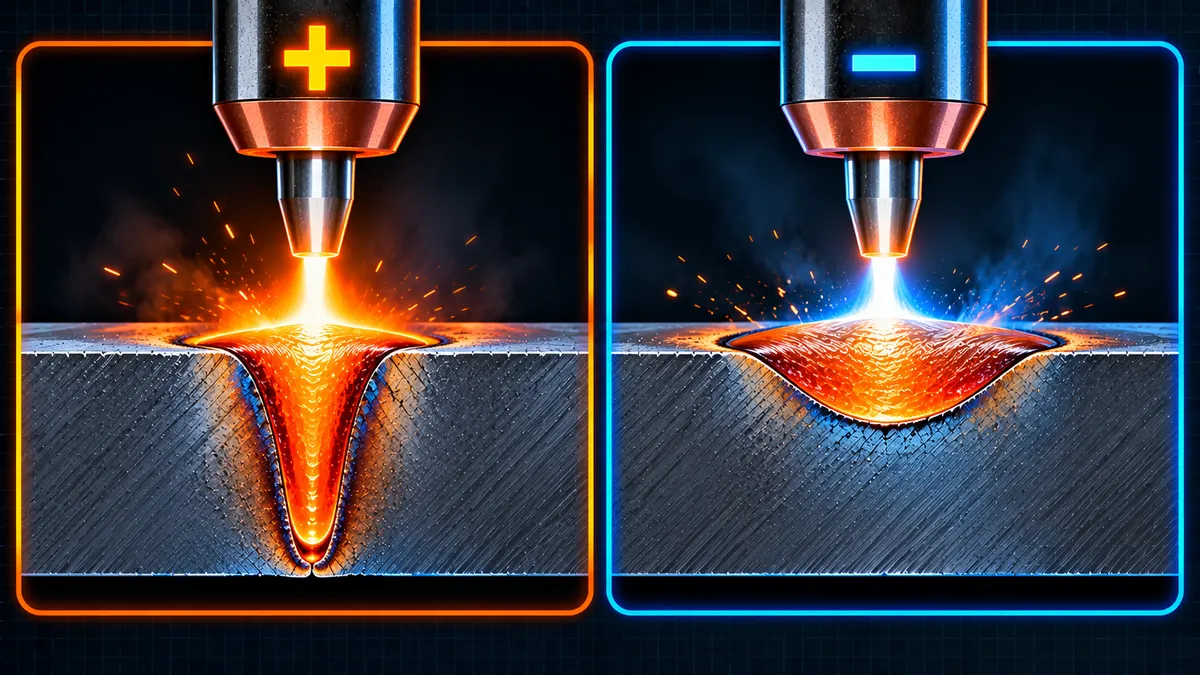
With every other variable held constant, changing only the direction of travel angle changes the heat that reaches the puddle. A drag angle points the arc into the puddle, which increases heat input and penetration and tends to raise crown height. A push angle points the arc away from the puddle, which reduces heat input at the puddle and produces shallower penetration and a flatter, wider bead surface.
| Characteristic | Drag (Backhand) | Push (Forehand) |
|---|---|---|
| Penetration | Deeper | Shallower |
| Heat input at the puddle | Higher | Lower |
| Bead surface | Taller crown, narrower | Flatter, wider |
| Slag behavior (slag-producing processes) | Slag stays behind the puddle Preferred | Slag can be driven ahead of the puddle Inclusion risk |
| Typical fit | SMAW, FCAW, thicker sections needing penetration | Thin material where burn-through is a concern, some solid-wire GMAW |
Because the two angles change heat input at the puddle, they interact directly with the current and travel speed effects covered in other WeldFabWorld guides: a heavy drag angle at high current on thin material can burn through, while a heavy push angle at low current can leave a shallow, wide bead with poor fusion at the root.
How Work Angle Shapes the Weld
Work angle controls how heat is distributed between the joint members and therefore the fusion pattern. A butt joint is normally welded with the electrode square to the plate surface, about 90 degrees across the joint. For T-joints and fillet welds, the electrode is aimed to bisect the included angle between the two surfaces, typically about 45 degrees to each member.
- Favoring one side: An incorrect work angle sends more heat into one member than the other. The favored side may overheat and undercut while the other side is left with lack of fusion.
- Unequal thickness: On heavy plate or where members differ in thickness, the electrode is often directed slightly more toward the thicker member so both sides fuse.
- Horizontal fillets: Gravity pulls the puddle down, so a slight upward bias is used to counter sagging; too steep an angle lets the puddle run downward and can produce cold lap or undercut on the vertical member.
Caution: Work angle errors are easy to miss because the bead can look acceptable from the top. The defect shows up as undercut on one toe or lack of fusion into one member, so check both toes and use appropriate inspection rather than judging by the bead face alone.
Where the Arc Actually Goes
A common misconception is that the arc fires in the direction the electrode points. In practice, current takes the path of least resistance, so the arc goes to wherever the electrode end is closest to the work, not necessarily along the electrode’s axis. Electrode angle still matters because it changes where the tip sits relative to the puddle and the joint edges, how the arc force pushes molten metal around, and where slag and gas flow, but the arc will jump to the nearest conductive surface.
Field tip: If the arc keeps wandering to one side of a joint, check work angle and tip position before touching current or voltage. Aiming the electrode so its tip is near the point you want fused is often the fastest fix.
Process-Specific Guidance
| Process | Typical Travel Angle | Reason |
|---|---|---|
| SMAW | Drag, about 5-15 degrees | Keeps slag behind the puddle while maintaining penetration |
| FCAW (slag-producing) | Drag, about 10-30 degrees; slight push of about 10-15 degrees for vertical-up | Pushing can roll a ball of slag ahead of the puddle, causing slag inclusion; vertical-up is the usual exception |
| GMAW (solid wire, gas) | Push or drag by preference and application; push is common where a flatter, wider bead and lower penetration are wanted | No slag to manage, so angle is chosen for profile, penetration, and visibility |
Angles are frequently not controlled in the welding procedure and are left to the welder’s discretion, so selecting the right angle and holding it steady throughout the weld is a practiced skill rather than a setting on a machine.
Angle by Welding Position
- Flat (1G/1F): The most forgiving position. A work angle near 90 degrees to the plate for butt joints (a slight tilt for visibility is acceptable) and a light drag travel angle of about 5-10 degrees for SMAW are typical.
- Horizontal (2G/2F): Gravity makes angle control more important. For fillets, keep the work angle near 45 degrees to each member with a slight upward bias, and keep travel angle within a modest drag range; excessive angles let the puddle flow down and can cause cold lap or undercut.
- Vertical (3G/3F): Angle guidance changes with direction of progression. For slag-producing wires, the usual rule is to drag, with a slight push acceptable for vertical-up progression in some processes; follow the consumable manufacturer’s data and the WPS.
Quick Reference: Symptoms and Angle Fixes
| Symptom | Likely Angle Cause |
|---|---|
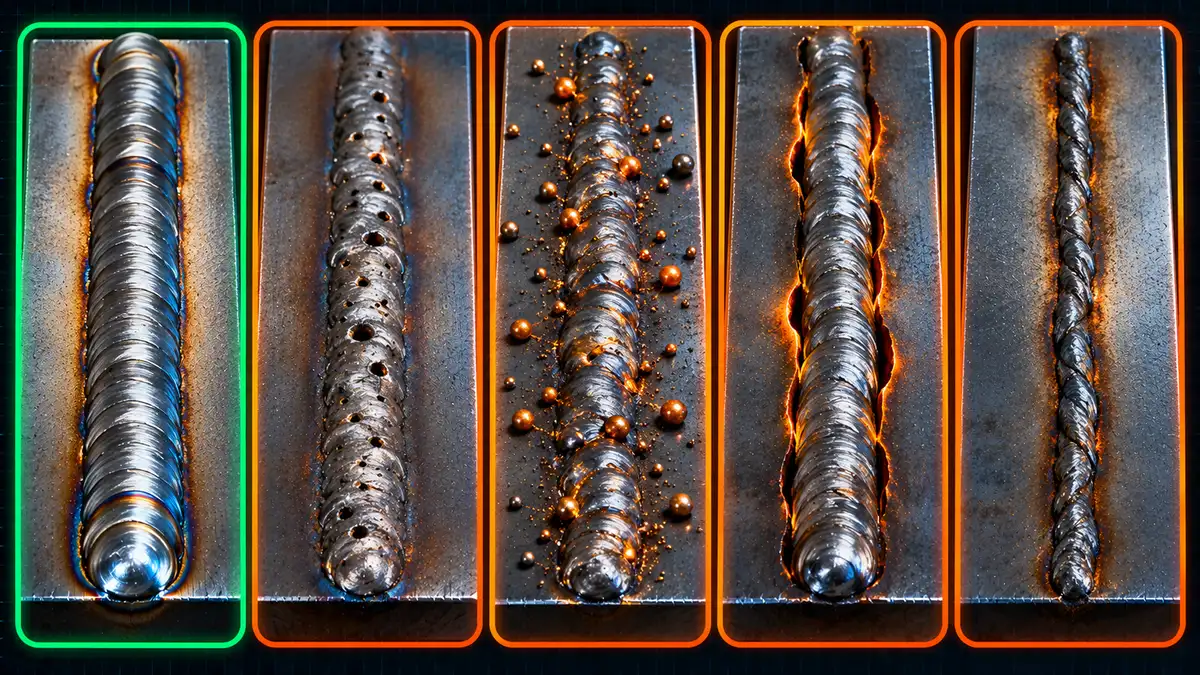
| Slag inclusion at the root or bead edge (SMAW/FCAW) | Push angle or too little drag Drag the electrode |
| Shallow penetration, wide flat bead | Push angle too pronounced Reduce push or drag slightly |
| Burn-through or tall narrow crown | Drag angle too steep for the material thickness |
| Undercut on one toe, lack of fusion on the other | Work angle favoring one side Re-center on the joint |
| Cold lap or undercut on the vertical member of a horizontal fillet | Angle too steep, puddle running downward |
| Arc wandering to one side | Electrode tip closer to one surface than the other |
Common Mistakes and Limitations
- Pushing a slag-producing electrode. Pushing SMAW or FCAW electrodes can roll slag ahead of the puddle and trap it as an inclusion; follow the drag rule except where the process or position specifically allows a slight push.
- Judging work angle by the bead face. A bead can look fine on top while one toe is undercut and the other member is not fused; inspect both toes.
- Treating angle as a substitute for correct current. Angle shifts heat and profile at the margins, but it cannot rescue a current setting that is wrong for the joint; set current for penetration first.
- Using one angle for every position. A flat-position habit carried into horizontal or vertical work can produce sagging, cold lap, or slag problems because gravity changes how the puddle behaves.
- Assuming the arc goes where the electrode points. The arc follows the shortest path to the work, so tip position relative to the joint matters as much as the tilt itself.
Specific angle recommendations depend on the process, consumable, joint, and position; confirm against the welding procedure specification and the consumable manufacturer’s data sheet, since angles are often not fixed in the WPS and are left to welder skill.
Key Terms
- Travel Angle
- The angle between the electrode and the joint along the weld axis, either a push or a drag angle.
- Work Angle
- The angle between the electrode and the work surface in the plane perpendicular to the weld axis, controlling how heat is divided between the joint members.
- Drag (Backhand) Angle
- A travel angle where the electrode points back toward the finished weld, directing the arc into the puddle and increasing penetration.
- Push (Forehand) Angle
- A travel angle where the electrode points in the direction of travel, directing the arc away from the puddle and reducing penetration.
- Slag Inclusion
- Non-metallic slag trapped in the weld metal or at the weld interface, often caused by pushing slag ahead of the puddle.
- Cold Lap
- A lack-of-fusion condition where weld metal overlaps the base metal without fusing to it, often from puddle sag or excessive angle.
Frequently Asked Questions
What is the difference between work angle and travel angle?
Travel angle is the electrode’s tilt along the direction of the weld, either a push or a drag. Work angle is the electrode’s tilt across the joint, perpendicular to the weld axis. Travel angle mainly controls penetration, heat input, and slag flow, while work angle controls how heat is split between the joint members.
Does a drag angle give deeper penetration than a push angle?
Generally yes. A drag angle points the arc into the puddle, increasing heat input and penetration and tending to raise the crown, while a push angle points the arc away from the puddle, giving shallower penetration and a flatter, wider bead, all other variables held constant.
Why should you drag when welding with flux-cored or stick electrodes?
Slag-producing processes generate slag that should stay behind the puddle. Pushing the electrode can drive a ball of slag ahead of the puddle, where it can be trapped as a slag inclusion, so the common rule is that if there is slag, you drag. The usual exception is vertical-up welding, where a slight push angle is used.
What work angle should be used for a fillet weld?
For a T-joint or fillet weld, the electrode is generally aimed to bisect the included angle between the two members, about 45 degrees to each surface, so both sides fuse evenly. Adjustments are made for unequal thickness or position, for example a slight upward bias on a horizontal fillet to counter sagging.
Does the wrong electrode angle cause undercut?
It can. An incorrect work angle favors one side of the joint, which can overheat and undercut that side while leaving the other member with lack of fusion. Excessive angles on a horizontal fillet can also let the puddle run down the vertical member, producing undercut or cold lap.
Is electrode angle specified in the welding procedure specification?
Electrode angles are usually not controlled in welding procedures and are left to the welder’s discretion, although the WPS may state a technique such as stringer versus weave. Because angle still affects heat input, penetration, and defect risk, holding a consistent, appropriate angle is treated as part of welder skill and workmanship.
Does the arc always go in the direction the electrode is pointing?
No. Current takes the path of least resistance, so the arc goes to wherever the electrode tip is closest to the work, not necessarily along the electrode’s axis. Electrode angle matters because it changes tip position, arc force direction, and slag and gas flow, but the arc will jump to the nearest conductive surface.
Standards and References
- ESAB University, “The Art and Science of Stick Electrode Angle Control” – work angle, travel angle, and position-specific angle guidance for SMAW.
- Open Washington Welding 1 textbook (Pressbooks), “FCAW Operation and Welding Techniques” – drag angle guidance and the slag rule for flux-cored welding.
- AWS Welding Handbook, American Welding Society – general reference for arc welding technique and weld bead formation.
Conclusion
Electrode angle is the one variable that costs nothing to change and yet reshapes the weld: travel angle sets how much of the arc’s energy lands in the puddle and where slag goes, and work angle decides whether both sides of the joint actually fuse. Drag for depth and slag control, push where a flatter, shallower bead is wanted, and keep the electrode aimed so the tip sits where you want the fusion. Because angle is usually left to the welder rather than written into the WPS, it is worth checking first when a weld shows slag inclusions, uneven toes, or a profile that does not match its current and voltage settings. For related topics, see the welding current and penetration guide and the voltage and bead width guide on WeldFabWorld.
About This Guide: This article was prepared by the WeldFabWorld technical team from the references listed above. Recommended angles vary by process, consumable, joint, and position; verify against the qualified welding procedure specification and the consumable manufacturer’s data sheet for your application.