Inorganic Zinc Silicate Coatings: Complete Guide
Inorganic zinc silicate coatings deliver the strongest and longest-lasting galvanic protection available in a shop or field-applied primer system, which is why they remain the specified base coat on offshore platforms, ship hulls, storage tanks, and heavy industrial structures decades after their introduction. Their performance advantage comes at a cost: inorganic zinc silicate is significantly less forgiving to apply correctly than organic zinc or standard epoxy primer, and improperly applied or improperly topcoated zinc silicate is one of the most common sources of expensive coating rework in industrial projects.
This guide covers the chemistry that makes inorganic zinc silicate work, the difference between self-cure and post-cure systems, practical application technique to avoid mudcracking, how to verify cure before topcoating, and how to prevent the bubbling and pinholing problems that plague poorly sequenced zinc silicate/topcoat systems. It builds on our companion guide comparing epoxy primer and zinc-rich primer selection.
This article focuses specifically on inorganic zinc silicate primers (ethyl silicate and water-based alkali silicate systems). Organic (epoxy-based) zinc-rich primers are covered separately in our epoxy vs zinc-rich primer selection guide.
Chemistry: How Zinc Silicate Cures
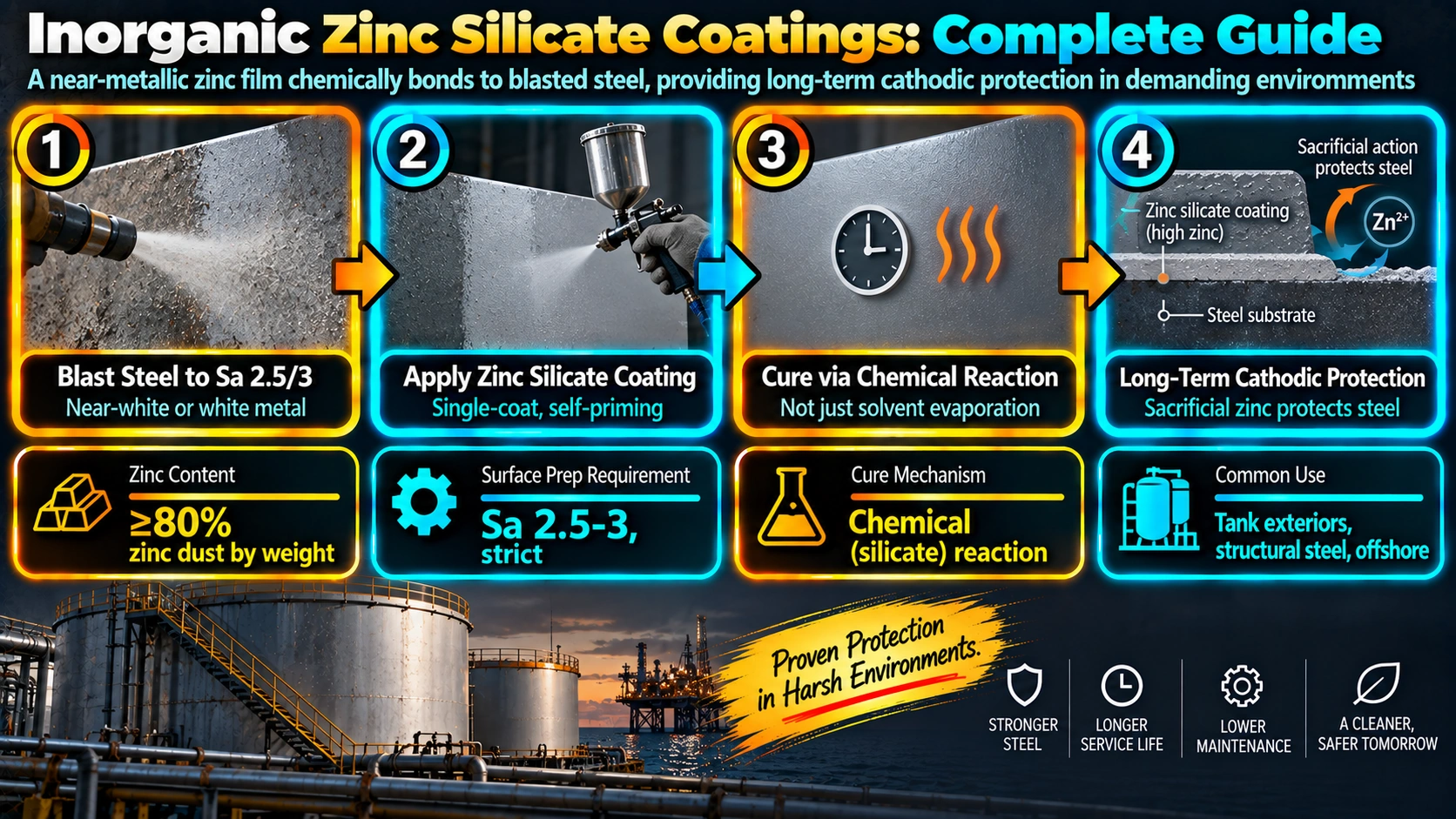
Inorganic zinc silicate coatings consist of a very high loading of metallic zinc dust, typically 80 to 95 percent by weight in the dry film, suspended in a silicate binder. The two main binder families are solvent-based ethyl silicate, which cures by reacting with atmospheric moisture and alcohol release, and water-based alkali (usually potassium or lithium) silicate, which cures primarily by water evaporation and subsequent reaction with atmospheric carbon dioxide. As the binder cures, it forms a hard, glass-like inorganic silica matrix that binds the zinc particles into a mechanically tough, highly heat- and abrasion-resistant film, unlike the flexible organic polymer film formed by epoxy-based coatings.
Ethyl Silicate vs Water-Based Inorganic Zinc
| Property | Ethyl Silicate (Solvent-Based) | Alkali Silicate (Water-Based) |
|---|---|---|
| Cure trigger | Atmospheric moisture | Water evaporation + CO2 reaction |
| VOC content | Higher (solvent-based) | Lower, compliant with strict VOC regulation |
| Application temperature range | Wider tolerance | More sensitive to humidity/temperature |
| Typical use | Offshore, marine, general industrial | Regions with strict VOC limits, tank interiors |
| Recoat/topcoat window | Follow data sheet, generally 16-24+ hours | Often requires longer cure before topcoat |
Application: Avoiding Mudcracking
Mudcracking is the single most common application defect in inorganic zinc silicate coatings. It occurs when the film is applied too thick in one pass, causing the inorganic silicate matrix to shrink unevenly as it cures and crack into an irregular network pattern resembling dried mud. Once mudcracking occurs, the affected area must typically be removed by blasting and reapplied, since the cracked film provides neither adequate barrier nor reliable galvanic continuity.
Exceeding the manufacturer’s maximum wet or dry film thickness in one pass, excessive overlap during spray application, applying in high humidity that accelerates surface skinning before the full film has flowed out, and using an incorrect thinner ratio are the most frequent causes of mudcracking in the field.
Verifying Cure Before Topcoating
Preventing Topcoat Bubbling and Pinholing
Because the cured inorganic zinc silicate film is inherently porous at a microscopic level, applying a low-permeability topcoat such as epoxy or polyurethane directly over it can trap air or solvent vapor that tries to escape through the wet topcoat film, producing bubbles, pinholes, or a pattern known as “popping.” This is one of the most frequent coating defects reported on projects using zinc silicate primer under a full-build epoxy topcoat.
| Prevention Measure | Why It Helps |
|---|---|
| Confirm full cure before topcoating | Reduces residual solvent/moisture available to outgas |
| Apply a thin mist/tie coat first | Seals surface porosity before the full-build coat traps vapor |
| Avoid excessive topcoat film build in one pass | Slower film formation gives trapped air more time to escape before gelling |
| Avoid topcoating in rising temperature conditions | Rising substrate temperature expands trapped air, worsening outgassing through the wet film |
If bubbling or popping is observed during a trial topcoat application on a sample panel, extend the cure time before topcoating the main structure, or request the coating manufacturer’s specific tie-coat recommendation for that zinc silicate and topcoat combination rather than proceeding and hoping the full application performs differently.
Surface Preparation and Holiday Testing
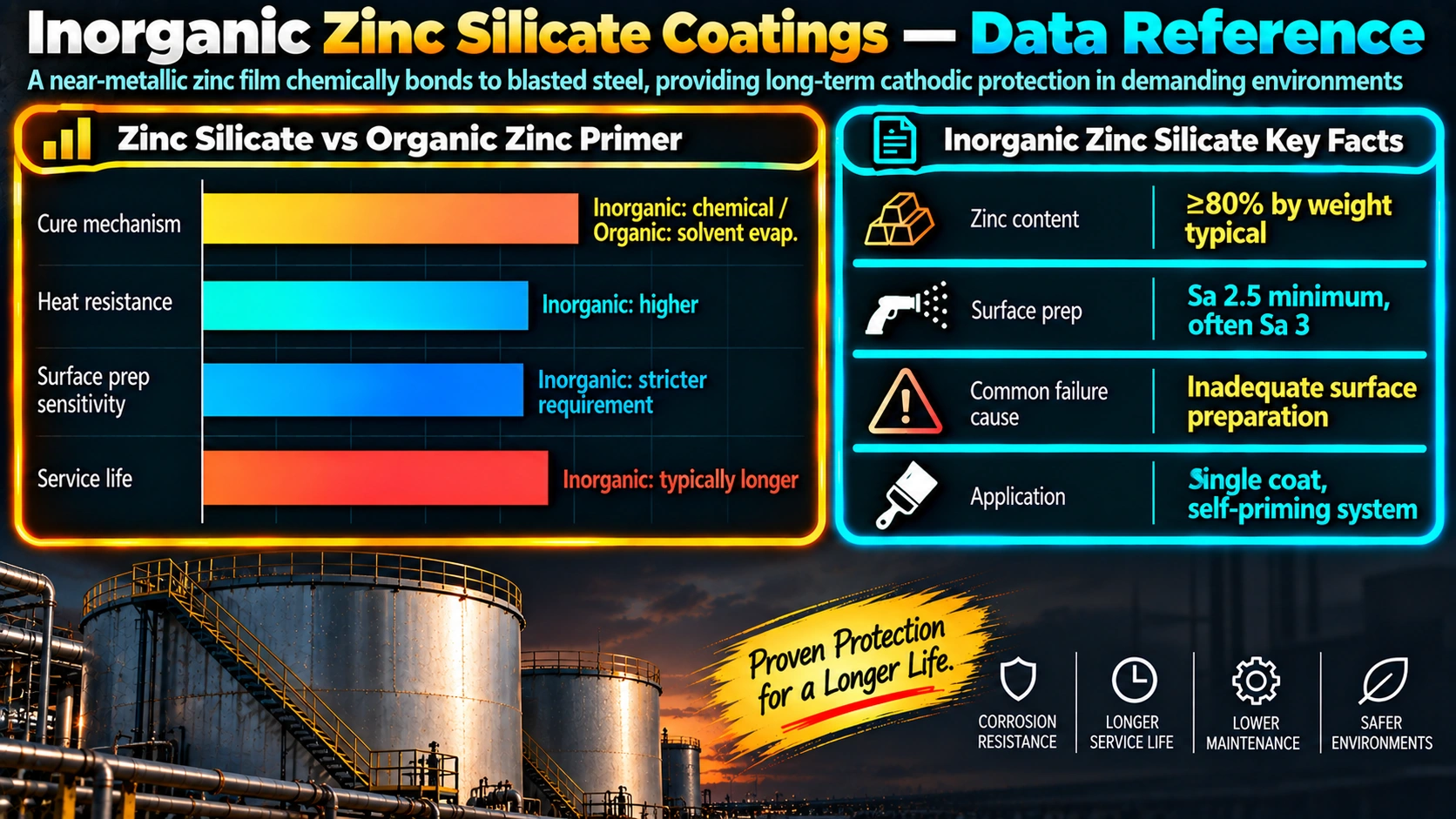
Inorganic zinc silicate demands excellent surface preparation, typically Sa 2.5 to Sa 3 with a well-developed surface profile, since poor substrate contact directly undermines both adhesion and the electrical continuity the galvanic protection depends on. After application and cure, holiday (pinhole) testing with a low-voltage wet sponge detector or high-voltage spark tester, depending on total system thickness, verifies that no coating discontinuities expose bare steel before the structure is placed in service or, for tanks, before hydrotest.
Common reference standards for zinc silicate application and inspection include SSPC-Paint 20 (zinc-rich primer requirements), ASTM D4752 (MEK resistance test method), and NACE SP0188 / ASTM D5162 (holiday detection test methods), alongside the general ISO 8501/SSPC/NACE surface preparation grades.
Typical Applications
- Offshore platforms and jackets: Long-term galvanic protection in the harshest atmospheric and splash-zone exposure.
- Ship hulls and ballast tanks: High-durability primer under specialised ballast tank coating systems.
- Storage tank exteriors: Common as the base coat under epoxy intermediate and polyurethane topcoat systems.
- Heavy structural steel: Bridges, power plant structures, and other assets with long design-life requirements.
- Weldable shop primer: Some inorganic zinc formulations are specifically designed for shop application with good weld-through characteristics ahead of fabrication.
As with any coating system, zinc silicate application should follow completion of welding, mechanical testing, and NDT sign-off, with weld areas locally re-blasted and re-primed after joint completion since the primer near the weld will have burned back during welding.
Record abrasive type and profile achieved, ambient conditions during application and cure, wet and dry film thickness readings per coat, cure verification method and result, holiday test results, and batch/lot numbers for the zinc silicate product used, all traceable to the specific structural member or panel.
Recommended Reference Material
Inorganic Zinc Coatings Technical Reference
Covers chemistry, application, and inspection of ethyl silicate and water-based zinc silicate coatings.
View on AmazonProtective Coatings for Offshore and Marine Structures
Reference on coating system design for offshore platforms, ships, and heavy marine structures.
View on AmazonHoliday Detector (Pinhole) Tester
Low-voltage wet sponge or high-voltage spark tester for coating discontinuity inspection.
View on AmazonPencil Hardness Test Kit
Standard pencil hardness kit for verifying cured coating film hardness before topcoating.
View on AmazonDisclosure: WeldFabWorld participates in the Amazon Associates programme (StoreID: neha0fe8-21). If you purchase through these links, we may earn a small commission at no extra cost to you. This helps support free technical content on this site.
Frequently Asked Questions
What is inorganic zinc silicate coating made of?
Inorganic zinc silicate coating consists of a very high loading of metallic zinc dust, typically 80 to 95 percent by weight in the dry film, dispersed in a silicate binder system, either an alcohol-based ethyl silicate (solvent-based) or an alkali silicate (water-based). The silicate binder reacts to form a hard, glass-like inorganic matrix that locks the zinc particles in place while maintaining the electrical continuity needed for galvanic protection.
What is the difference between self-cure and post-cure zinc silicate?
Self-cure ethyl silicate coatings cure through reaction with atmospheric moisture over a period of days, requiring adequate humidity and temperature but no additional chemical treatment. Post-cure zinc silicate coatings require an active curing step, such as applying a dilute phosphoric acid or similar curing solution, to accelerate and complete the silicate reaction, which is more common in shop-controlled application where cure time needs to be shortened.
What causes mudcracking in zinc silicate coatings and how can it be prevented?
Mudcracking occurs when zinc silicate is applied at excessive dry film thickness in a single coat, causing the inorganic film to shrink and crack into a pattern resembling dried mud as it cures. It is prevented by staying within the manufacturer’s maximum recommended DFT per coat, typically 65 to 100 microns, using proper spray technique with adequate but not excessive overlap, and applying a second coat only after the first has adequately cured if additional thickness is required.
Why does topcoat over zinc silicate sometimes bubble or pop?
Bubbling or popping in a topcoat applied over zinc silicate primer is usually caused by outgassing, where air or solvent trapped in the porous zinc silicate film escapes through the wet topcoat film as it is being applied or during early cure, particularly when the topcoat is applied too thick or too soon after priming. This is prevented by following the coating manufacturer’s minimum cure time before topcoating, using a mist coat or tie coat where recommended, and controlling topcoat film build per the data sheet.
How is proper cure of zinc silicate coating verified before topcoating?
Cure verification methods include the MEK (methyl ethyl ketone) solvent rub test, where a cloth soaked in MEK is rubbed against the coating and cure is confirmed if minimal color transfer occurs, and hardness testing with a pencil hardness kit or similar method. Manufacturers also specify minimum cure times based on temperature and humidity, and these should be verified against logged site conditions before proceeding to topcoat application.
Where is inorganic zinc silicate coating commonly used?
Inorganic zinc silicate is widely used as the primer coat on offshore platforms, ship hulls and ballast tanks, storage tank exteriors, structural steel in marine and heavy industrial environments, and power plant structures where long-term durability and strong cathodic protection at coating damage points justify its higher application skill requirement and cost compared to organic zinc or standard epoxy primers.